



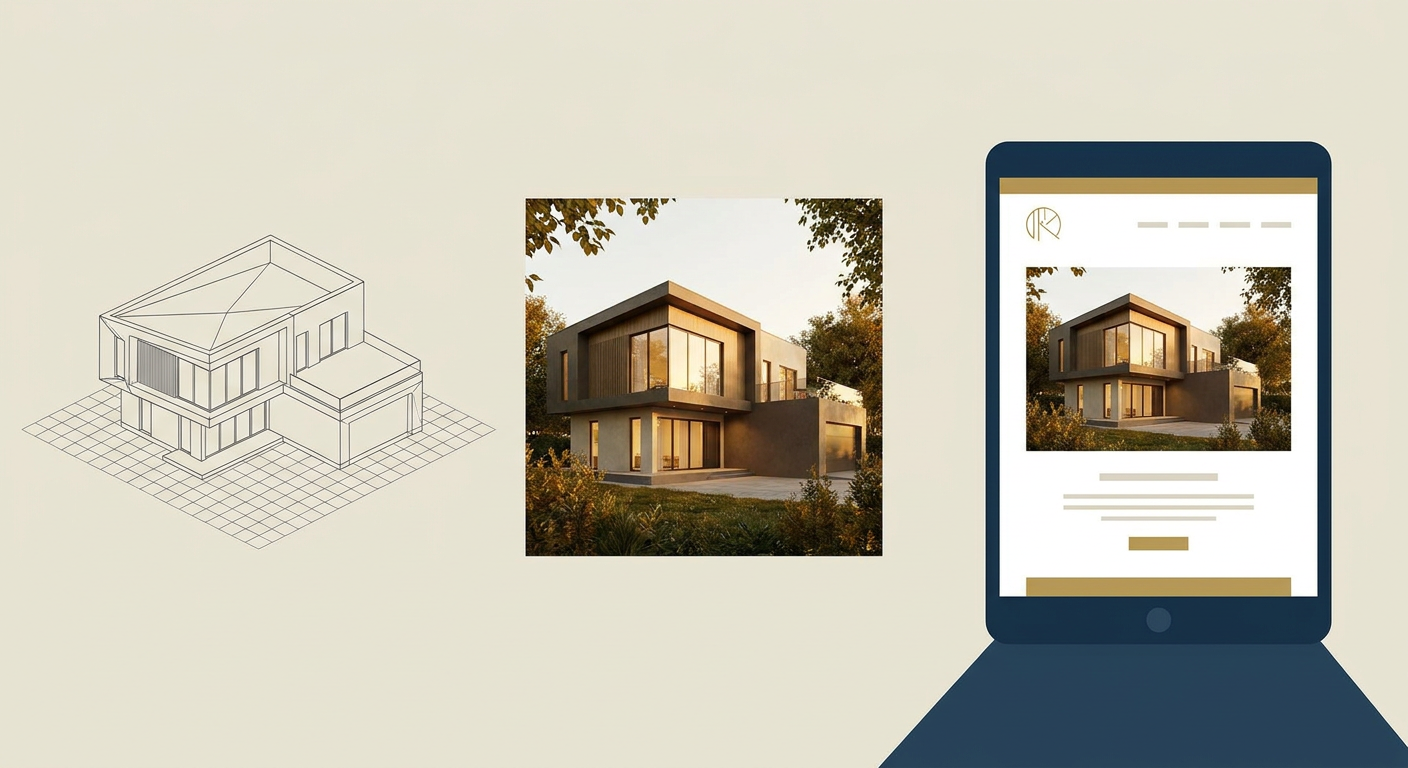
CGI rendering for real estate marketing helps developers sell something buyers cannot fully visit yet. Before construction is complete, the marketing system has to do more of the explanatory work. Visuals become part of how the project is understood, trusted, and compared.
That is why CGI matters commercially, not just aesthetically. Grand View Research projects strong long-term growth in the 3D rendering market, while buyer behavior continues to reinforce the importance of digital-first evaluation. The National Association of REALTORS reports that 43% of buyers began their home search online, and separate 2025 findings show that 52% found the home they purchased through the internet. Sources: Grand View Research 3D rendering market report, NAR 2025 home search behavior, 2025 buyer findings summary.
For developers, the implication is practical. If the product is not yet physically available, CGI becomes one of the main tools shaping confidence before enquiry and before sale.
What CGI rendering means in a developer context
In real estate, CGI is not one single deliverable. It is a family of visualization tools that help explain a project before or during construction.
This can include:
- exterior hero renders
- interior lifestyle visuals
- aerial or masterplan imagery
- animations and flythroughs
- virtual tours or interactive views
- website, brochure, and presentation visuals
The strongest use of CGI is not simply making the project look beautiful. It is helping buyers understand what they are being asked to believe in.
Why CGI is so important for pre-completion sales
For many new developments, the buyer is purchasing into a promise. That promise may be shaped by architecture, location, amenities, brand, or investment potential, but it still needs to become believable.
CGI helps by:
- making the product less abstract
- showing the mood and design direction clearly
- helping the project feel more finished earlier in the cycle
- creating stronger material for websites, campaigns, and presentations
This is one reason CGI is especially valuable for premium, destination-led, and design-sensitive projects. The higher the emotional and financial stakes, the more clarity matters.
The main CGI use cases developers should think about
1. Hero visuals for launch marketing
These are often the first images buyers see in ads, brochures, or website hero sections. They set tone, quality, and emotional expectation.
2. Interior lifestyle storytelling
Interior renders help buyers move from architecture to lived experience. They show how the design promise actually feels.
3. Aerials and masterplan context
For larger developments, masterplan and aerial visuals help explain scale, connectivity, and destination logic.
4. Video and motion content
Animations and cinematic walkthroughs are useful when the project story needs to unfold more gradually or when the campaign is strongly visual.
5. Sales support materials
CGI is not only for advertising. It also strengthens sales decks, presentations, investor materials, and launch microsites.
How CGI supports the wider marketing system
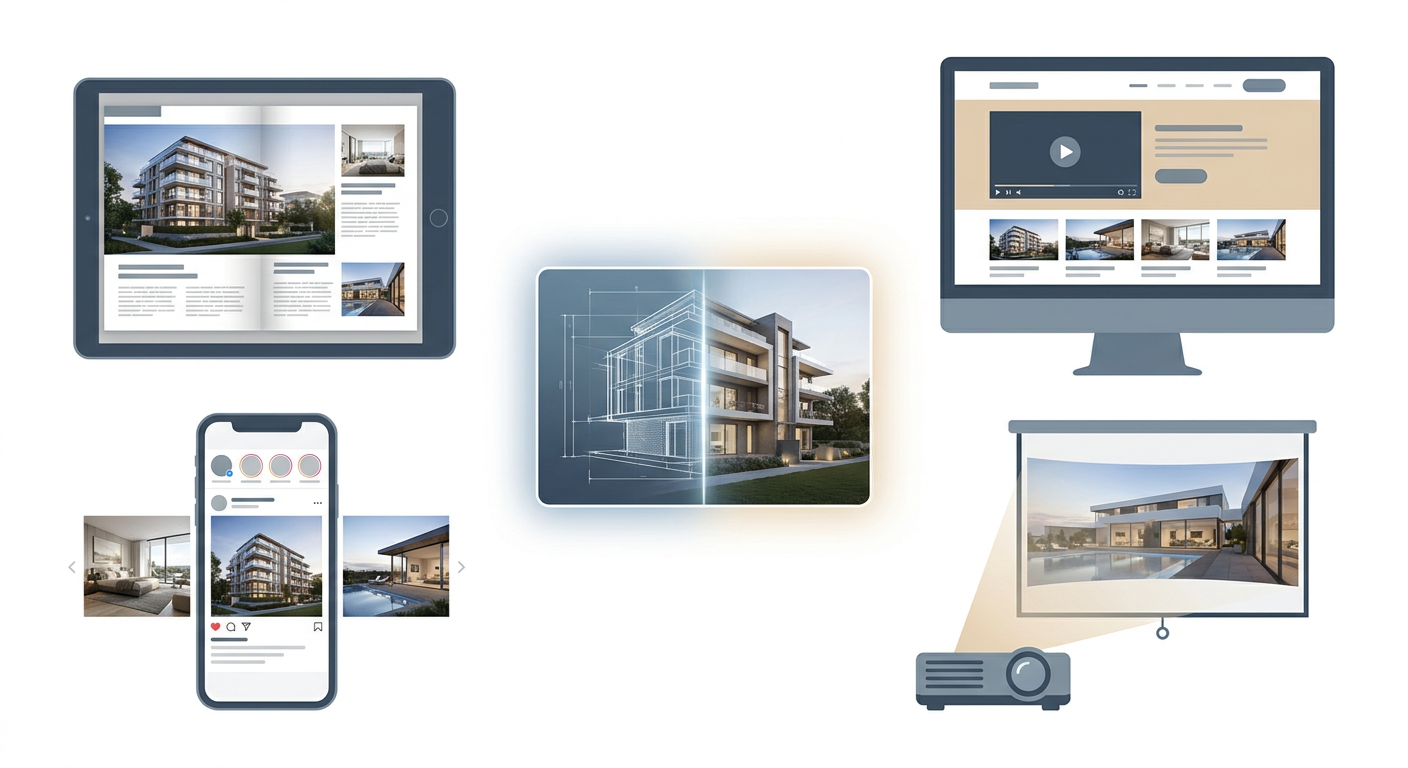
A strong render becomes more valuable when it is used across the whole launch system rather than left as a standalone asset.
It can support:
- the website and landing pages
- paid social campaigns
- brochure design
- email sequences
- sales presentations
- PR and launch materials
This integrated use is where the real leverage often appears. The same visual logic can reinforce the brand across multiple touchpoints, which is also why MARKETIKA’s project portfolio is useful context. The strongest developer-facing work usually connects visualization, digital structure, and conversion logic rather than treating them as separate disciplines.
Renders, animation, and virtual tours are not the same thing
Developers often group all visualization together, but each format solves a different problem.
Stills
Best for hero moments, ads, brochures, and fast emotional communication.
Animation
Best when the story depends on sequence, movement, or atmospheric build-up.
Interactive views and tours
Best when users need to explore or compare more actively rather than passively watch.
The right choice depends on what the buyer needs to understand at that specific stage.
What makes CGI persuasive rather than generic
The difference between average CGI and effective CGI is usually not just technical quality. It is relevance.
Good CGI should:
- reflect the actual positioning of the project
- match the target audience’s expectations
- feel consistent with the brand and website
- help the buyer understand something meaningful
For example, a family-oriented development should not be visualized like a speculative nightlife tower. A calm waterfront residence should not feel visually aggressive. The imagery has to support the project story.
Common mistakes developers should avoid
Using beautiful visuals without enough context
A render can impress but still fail to explain what the buyer is looking at.
Treating CGI as only a brochure asset
The best CGI should travel across the website, campaigns, and sales materials.
Creating visuals that do not match the brand promise
If the render tone and the wider brand experience feel disconnected, trust weakens.
Producing too few formats
Sometimes developers invest in one hero image but not the supporting visual system needed for conversion.
How this looks in practice
Public project references such as Velos Residence and Evolutions help show why visualization quality matters. When the digital presentation is coherent, the project feels more deliberate and more trustworthy before a buyer ever steps on site.
The important point is not just that the visuals are polished. It is that they support understanding and confidence.
FAQ
Do CGI renders help sell pre-construction or off-plan projects?
Yes. They reduce abstraction and help buyers understand the promise earlier, which is especially valuable when the completed product is not yet available to visit.
What is the difference between renders and virtual tours?
Renders are usually single high-quality visual moments. Virtual tours and interactive tools are designed for exploration and comparison.
Can CGI be used beyond the website?
Absolutely. It is often most valuable when it supports ads, brochures, email, presentations, and PR as well as the website.
How can MARKETIKA help?
MARKETIKA can connect CGI, web experience, branding, and launch strategy into one developer-focused system that supports both perception and conversion.
Final takeaway
CGI rendering for real estate marketing works best when it helps buyers understand the project before it is built, not when it simply makes the visuals look expensive. The strongest CGI systems support trust, story, and conversion across the full launch journey.
For developers, that makes CGI a commercial tool as much as a creative one.