



A buyer may discover a project through an ad, a portal listing, a broker introduction, or a social post.
That may create interest.
But interest alone is rarely enough in pre-construction and off-plan sales. Before committing to something unfinished, buyers want to know who is behind it, what they have delivered before, and whether the company feels credible enough to trust.
That is why developer reputation is not background information.
It is a conversion asset.
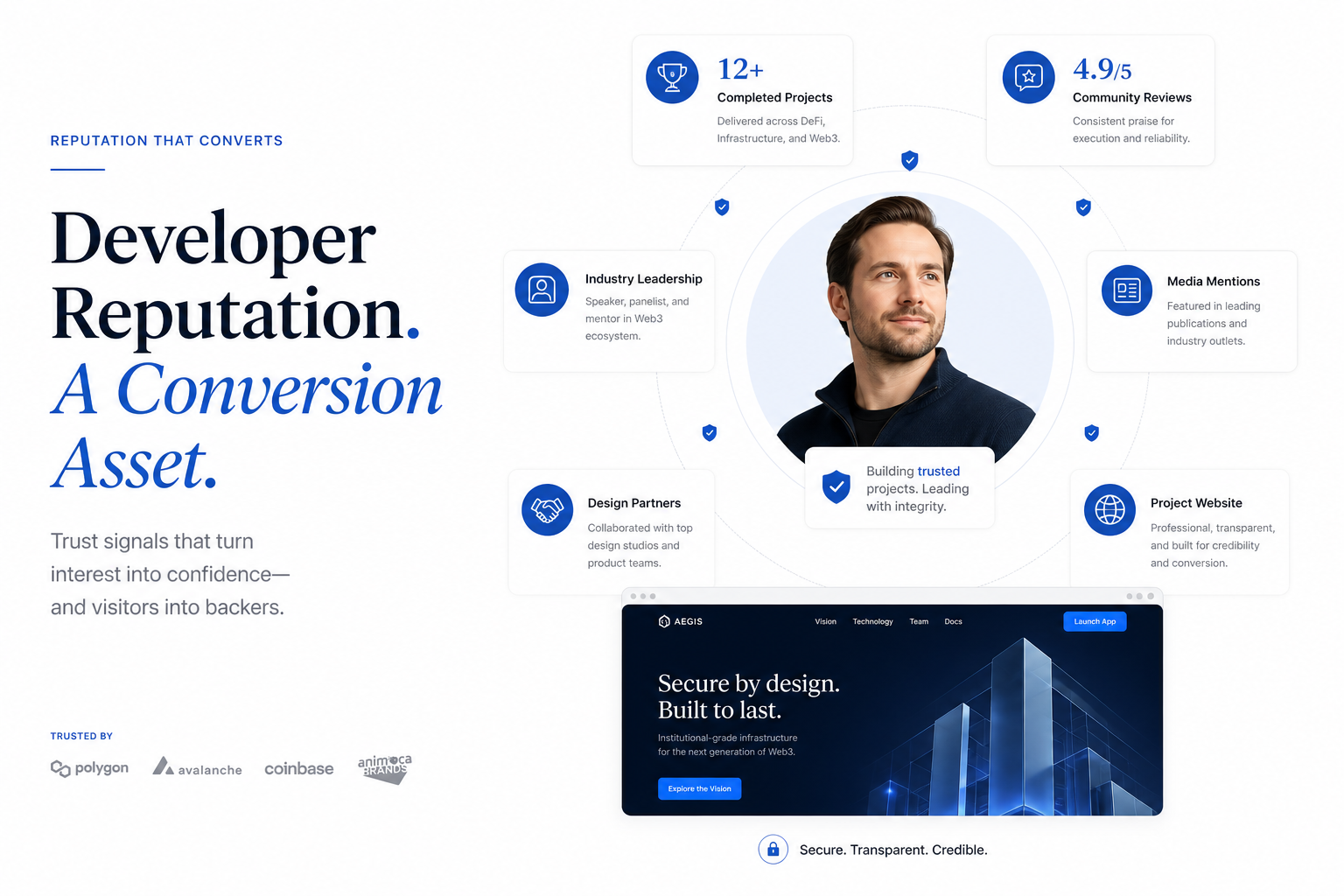
Developer reputation influences whether the market believes the project can be delivered as promised. Completed projects, public reviews, leadership visibility, design partners, media perception, and the coherence of the corporate brand all shape how risky or reliable the opportunity feels.
Buyers research the developer whether you plan for it or not
When prospects become serious, they rarely evaluate only the building.
They also search for the developer itself.
They look at:
- past projects
- quality of delivery
- how the company presents itself online
- reviews and public commentary
- leadership credibility
- who the design and construction partners are
- whether the project feels like part of a trustworthy system
This research happens naturally, especially when the buyer cannot yet walk through the finished asset.
In other words, reputation is already part of the decision. The only question is whether the developer makes it easy to evaluate.
Why reputation matters even more before completion
In completed real estate, buyers can inspect the built result directly.
In pre-construction, that proof is incomplete.
The market therefore uses proxy signals.
A credible developer reduces uncertainty because buyers can point to evidence:
- a history of completed projects
- a recognizable design standard
- reliable communication
- a known service or delivery quality
- a consistent public presence
This is the same trust logic behind real estate branding for developers. Before the building can prove itself, the brand has to carry more of the belief burden.
What strong reputation signals look like
The best reputation signals are visible, specific, and easy to connect back to the current project.
Completed developments
Past work is one of the strongest forms of proof. It shows what the developer has actually delivered, not just what it claims it can deliver.
Leadership and team visibility
When leadership feels clear, articulate, and credible, the company becomes easier to trust. This does not mean vanity content. It means thoughtful visibility that shows seriousness and accountability.
Public reviews and testimonials
For some developers, third-party review environments can support credibility, especially when they reflect consistency over time. Even MARKETIKA's own customer reviews profile demonstrates how public reputation can strengthen trust when buyers or prospects are comparing partners.
Design and operating partners
Architects, interior designers, hospitality operators, and strategic collaborators can also reinforce the credibility of a launch, especially when their role is explained clearly rather than dropped in as a list of logos.
A coherent digital presence
A fragmented corporate website, outdated project archive, weak search presence, or inconsistent materials can quietly erode trust. By contrast, a strong developer project portfolio and a clear expertise overview for developer-focused services show how connected digital presentation helps credibility feel more concrete.
Reputation should be visible inside the buyer journey
One common mistake is treating reputation as something separate from conversion.
Teams assume the project page should focus only on the current launch, while the developer's story lives elsewhere.
That separation is often inefficient.
The stronger approach is to surface reputation where it helps the buyer decide:
- on project websites
- in pre-launch pages
- near enquiry points
- in broker materials
- in sales presentations
- inside follow-up sequences
A buyer should not have to work too hard to find proof that the company behind the project deserves confidence.
Reputation compounds across launches
A developer launching multiple projects should think beyond the current campaign.
Every successful project can strengthen the conditions for the next one, but only if the market connects the work back to the parent brand.
That means the developer website, project websites, search visibility, case-study logic, and public proof all need to work together. Developers who manage this well do not start from zero every time. They begin the next launch with more trust already in place.
What new or lesser-known developers can do
Not every company has decades of delivery history.
That does not mean trust is impossible.
Newer developers can build credibility through:
- transparent communication
- high-quality design and partner selection
- leadership visibility
- clearer process explanation
- stronger digital presentation
- proof from team backgrounds or related experience
The key is to substitute empty claims with whatever real evidence is available.
Final takeaway
Reputation is not separate from conversion.
In pre-construction and off-plan sales, it is one of the signals buyers use to decide whether the project deserves their trust.
Developers who make that proof more visible create a smoother path from interest to belief, and from belief to action.


