



Google Ads for real estate developers work best when campaign structure reflects how buyers actually search for projects. For developers, search is valuable because it captures intent that already exists rather than only creating awareness from scratch.
That matters because project launches often attract very different search behaviors at the same time. Some users search by location, some by product type, some by investment angle, and some by brand or project name. If campaign structure collapses all of that into one setup, performance usually becomes harder to control.
Why Google Ads matter in developer marketing
Search campaigns are especially useful when developers need to:
- capture high-intent demand around project categories or locations
- protect branded search demand once launch visibility increases
- support pre-launch, launch, and retargeting stages with different intent signals
- direct serious buyers to the right landing experience quickly
Google Ads are not the whole strategy, but they are one of the clearest ways to turn active buyer intent into qualified traffic.
What a better campaign structure looks like
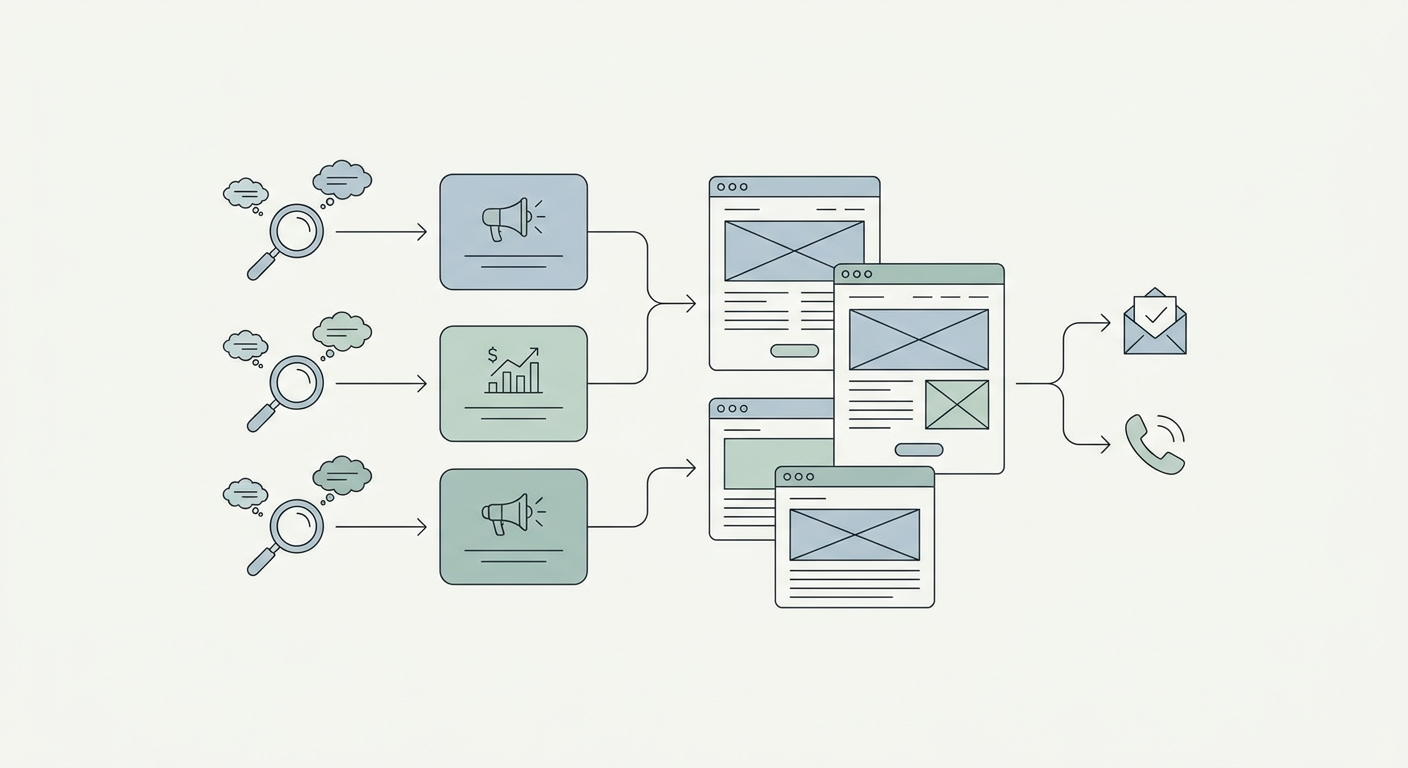
A stronger structure usually separates campaigns by meaningful intent rather than by convenience.
Useful groupings often include:
- branded campaigns for project or developer name searches
- location campaigns for area- or neighborhood-based demand
- category campaigns for terms such as waterfront residences, branded residences, or pre-construction condos
- competitor or comparison campaigns where strategically appropriate
- remarketing support through broader Google inventory
This separation matters because different searches deserve different messages and different landing pages.
Match the landing page to the search intent
The landing page should answer the reason the user searched in the first place.
For example:
- a branded search should land on a strong project or developer page
- a location search should emphasize place, access, and context
- a product-type search should explain the relevant offer clearly
- an investor-oriented search should make value logic and proof easy to understand
If the page does not match the query, the campaign often pays for traffic it cannot convert well.
Keywords should reflect real project demand
Developers often benefit from focusing on queries such as:
- branded project searches
- location + project type combinations
- new development or pre-construction demand terms
- investment-oriented queries in the right markets
- high-intent long-tail searches that indicate serious comparison
The goal is not maximum keyword volume. It is to capture the searches most likely to lead to useful conversations.
What good ad messaging should do
A stronger real estate search ad should:
- reflect the specific intent behind the keyword
- make the project or offer feel relevant quickly
- avoid vague prestige language
- support a clear next step
- reinforce why the click is worth taking now
Specificity usually performs better than generality. Buyers respond more clearly when the ad gives them a real reason to continue.
The role of landing pages and microsites
Search performs better when the destination is purpose-built.
A stronger landing experience usually:
- answers the user’s core question fast
- presents the project clearly and calmly
- uses premium visuals without losing clarity
- supports low-friction enquiry
- connects naturally to sales follow-up
This is one reason MARKETIKA’s real estate project portfolio and specialist expertise across websites, digital marketing, and branding matter as internal references. Search traffic becomes more valuable when the destination is designed to convert serious interest rather than simply display information.
What developers should measure
Google Ads should be reviewed beyond clicks and impressions.
A stronger measurement view usually includes:
- conversion rate by campaign and intent cluster
- cost per qualified lead
- speed to lead after form submission
- meeting or viewing rate from search traffic
- branded versus non-branded performance
- landing page behavior and drop-off points
These numbers reveal whether the search setup is actually producing commercially useful demand.
Common mistakes to avoid
Combining too many intents in one campaign
When brand, location, and category demand are mixed together, optimization becomes less precise.
Sending all traffic to one generic page
Different search intents usually deserve different landing logic.
Writing ads that sound like everybody else
Generic luxury language tends to weaken relevance.
Ignoring branded search protection
When awareness rises, competitors and portals can capture demand that should land on the developer’s own assets.
Optimizing only for cheap leads
High-intent search traffic often deserves evaluation based on lead quality and progression, not only front-end cost.

A practical campaign framework
A useful sequence often looks like this:
- define the buyer intents that matter most
- structure campaigns around those intent groups
- write ad messaging that reflects each search type
- match each campaign to the right landing experience
- review results based on qualified demand, not only click efficiency
That framework helps search campaigns become a more dependable part of the launch system.
FAQ
Why are Google Ads useful for real estate developers?
Because they capture active search demand from buyers and investors already looking for a relevant project, location, or category.
Should developers focus on branded or non-branded keywords?
Usually both. Branded search captures direct interest, while non-branded search helps reach users earlier in comparison and discovery.
Do landing pages really affect Google Ads results?
Yes. Even strong keywords and ads underperform when the landing page does not match the user’s intent.
How can MARKETIKA help?
MARKETIKA can connect project examples, specialist expertise, and broader digital strategy into search campaigns that work better with the website and sales system.
Final takeaway
Google Ads for real estate developers work best when campaign structure mirrors real buyer intent. Developers that separate search demand intelligently, match it to the right landing pages, and measure quality instead of only volume create better conditions for stronger project-launch performance.
That is what turns search from traffic acquisition into a more dependable source of qualified demand.