


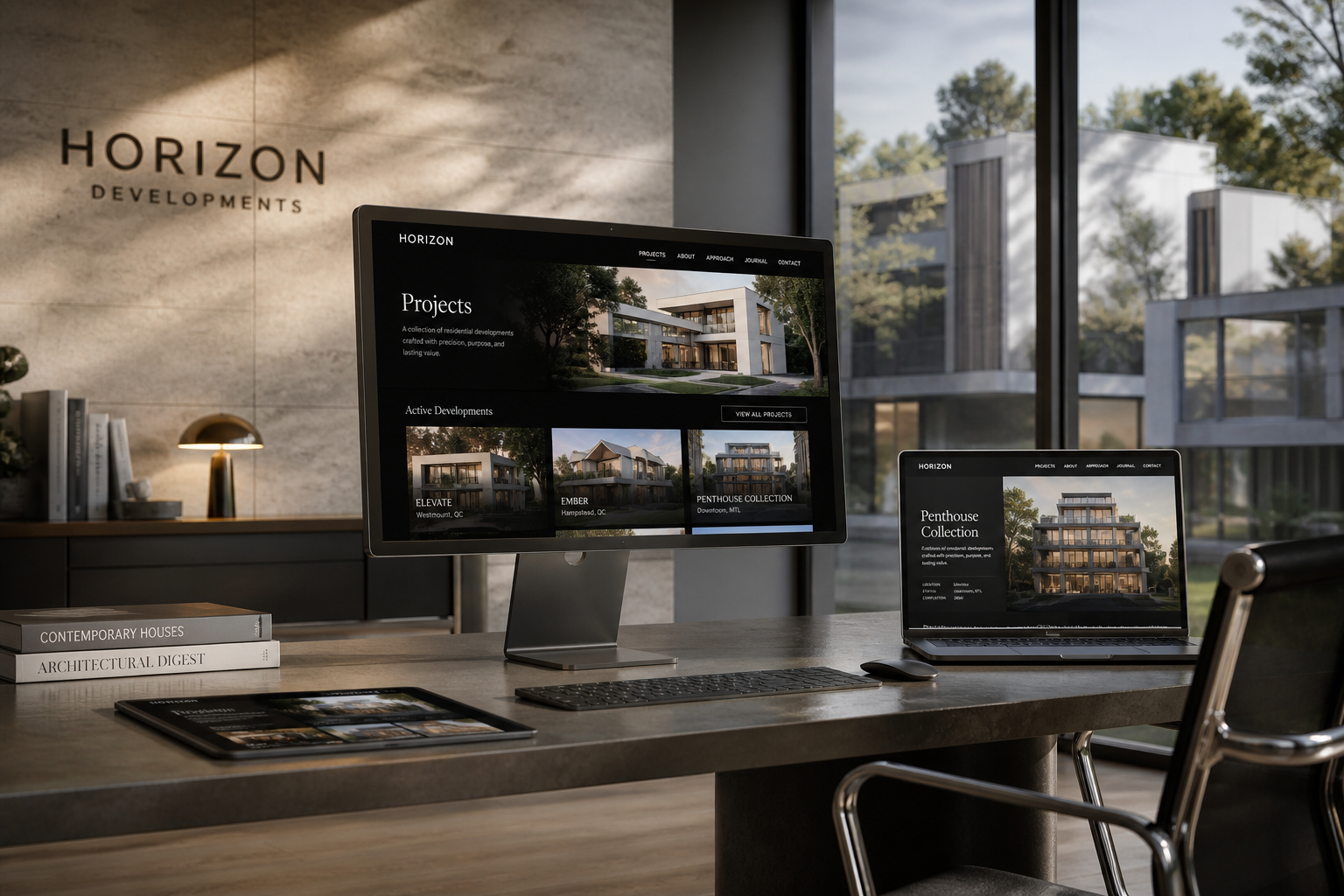
A developer with one active project can often get away with a simpler web structure.
A developer with several active, upcoming, and completed developments cannot.
At that point, the website needs to do more than act like a digital brochure. It has to help multiple audiences understand the company, discover the right project, and build trust in the brand behind the portfolio.
That is a different job from a single-project microsite.
A multi-project developer website should separate the corporate brand from individual project journeys while connecting them clearly. It should organize active, upcoming, and completed developments in a way that reflects how users actually search, compare, and build confidence.
Corporate site and project site do different jobs
One of the most common website mistakes is forcing one environment to do two different things badly.
The corporate site should answer questions such as:
- who the developer is
- where it operates
- what kinds of projects it builds
- what has already been completed
- what is currently selling or launching
- why the company is credible
A project site or project page should answer different questions:
- what this development is
- who it is for
- how it is positioned
- how to explore units, amenities, location, and next steps
When those responsibilities are blurred, visitors often get too little corporate trust or too little project detail.
Structure the portfolio around user needs
A good multi-project site should not force users to scroll through an undifferentiated archive.
Useful groupings often include:
- now selling
- coming soon
- under construction
- completed
- rental communities
- geographic markets
- project type, such as condo, villa, mixed-use, branded residence, or office
This mirrors the way real buyers, brokers, partners, and investors look for information.
A returning buyer may want to find current launches quickly. A broker may want the latest selling inventory. A lender or partner may want to understand the full track record. A future prospect may want to see whether the company has delivered projects like this before.
The structure should make all of those paths easy.
Completed projects should do more than sit in an archive
Many developers underuse completed work.
Finished projects are not only historical documentation. They are proof.
They help demonstrate:
- delivery capability
- design consistency
- market experience
- scale and ambition
- credibility for future launches
This is one reason a strong multi-project site becomes part of the wider trust system. Completed work gives active projects more legitimacy, especially in pre-construction categories where buyers are still evaluating future promises.
Navigation should move naturally from brand to project
The best structure does not force users to re-orient repeatedly.
A visitor might begin by learning about the company, then move into a current development, then want to compare it with another project or with completed proof. The transition between those layers should feel seamless.
That means:
- clear parent-brand navigation
- obvious pathways into current projects
- strong breadcrumbs or portfolio logic
- consistent CTA patterns
- shared credibility elements where appropriate
MARKETIKA's high-converting real estate project website guide and project website checklist both support the same principle: web structure should reduce decision friction rather than create it.
Not every project needs its own separate website
This is often treated as an all-or-nothing choice.
It is usually not.
Some developers benefit from separate project microsites for major launches. Others are better served by a strong parent platform with robust individual project pages. The right answer depends on:
- project scale
- brand strategy
- sales urgency
- market overlap
- how much independent storytelling the project needs
The key is not whether the URL is separate. The key is whether the project gets enough dedicated space and a clear conversion path.
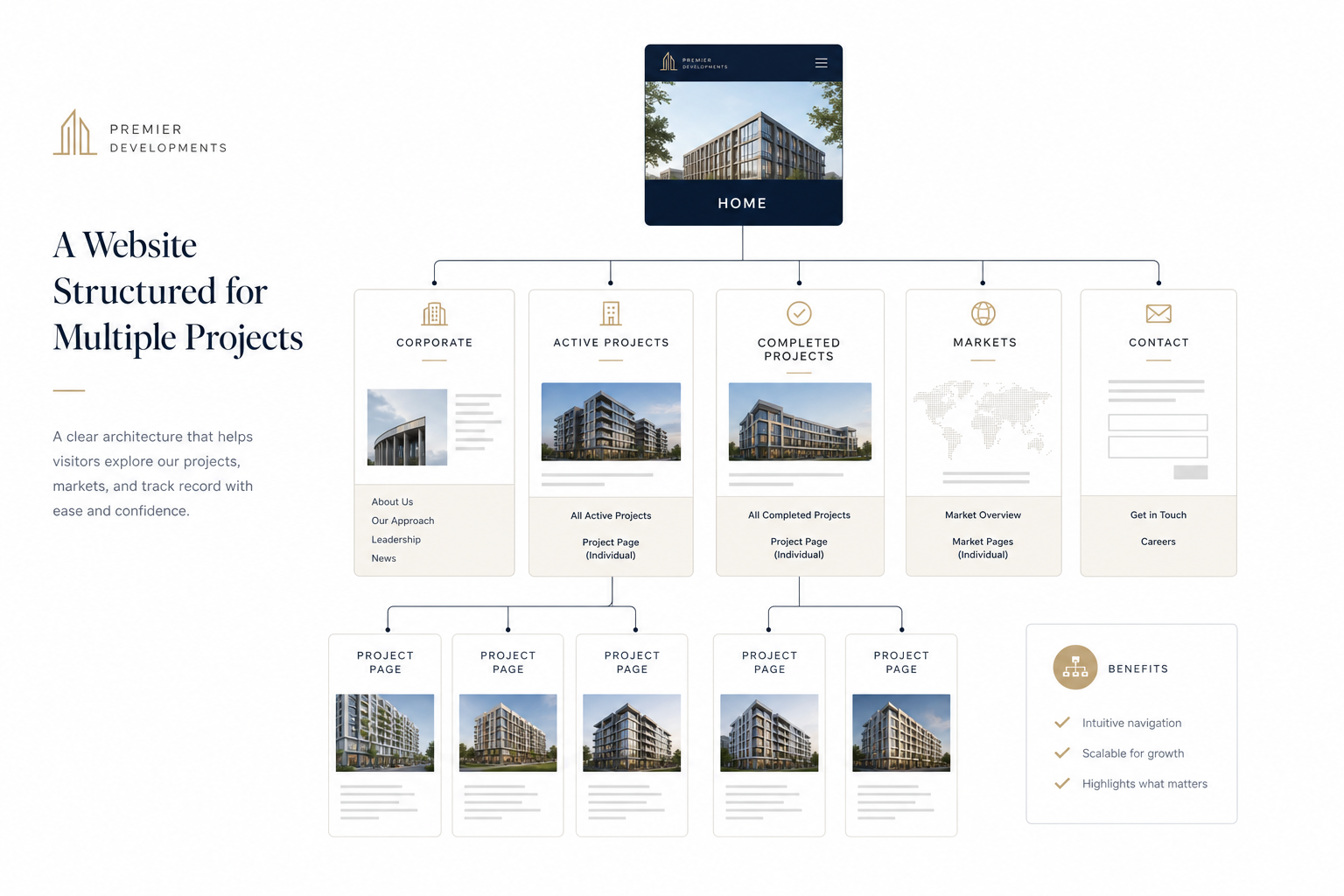
A simple information model for most developers
This kind of model helps the website serve both short-term selling and long-term brand-building.
Final takeaway
A good developer website does two jobs at once.
It helps people discover the right project today while building trust in the company behind the next one.
Developers with multiple projects need a web structure that reflects that reality. When the hierarchy is clear, each launch becomes easier to find, easier to understand, and easier to trust within the context of the broader portfolio.


