


A renter and a buyer may look at the same floorplan.
But they are not making the same decision.
That distinction matters more than many developer teams admit. Too often, rental communities are marketed with the same logic as condo launches, just with different pricing mechanics. The result is a journey that feels slightly off. The visuals may be strong, the site may be polished, but the message does not fully match what the prospect is actually trying to decide.
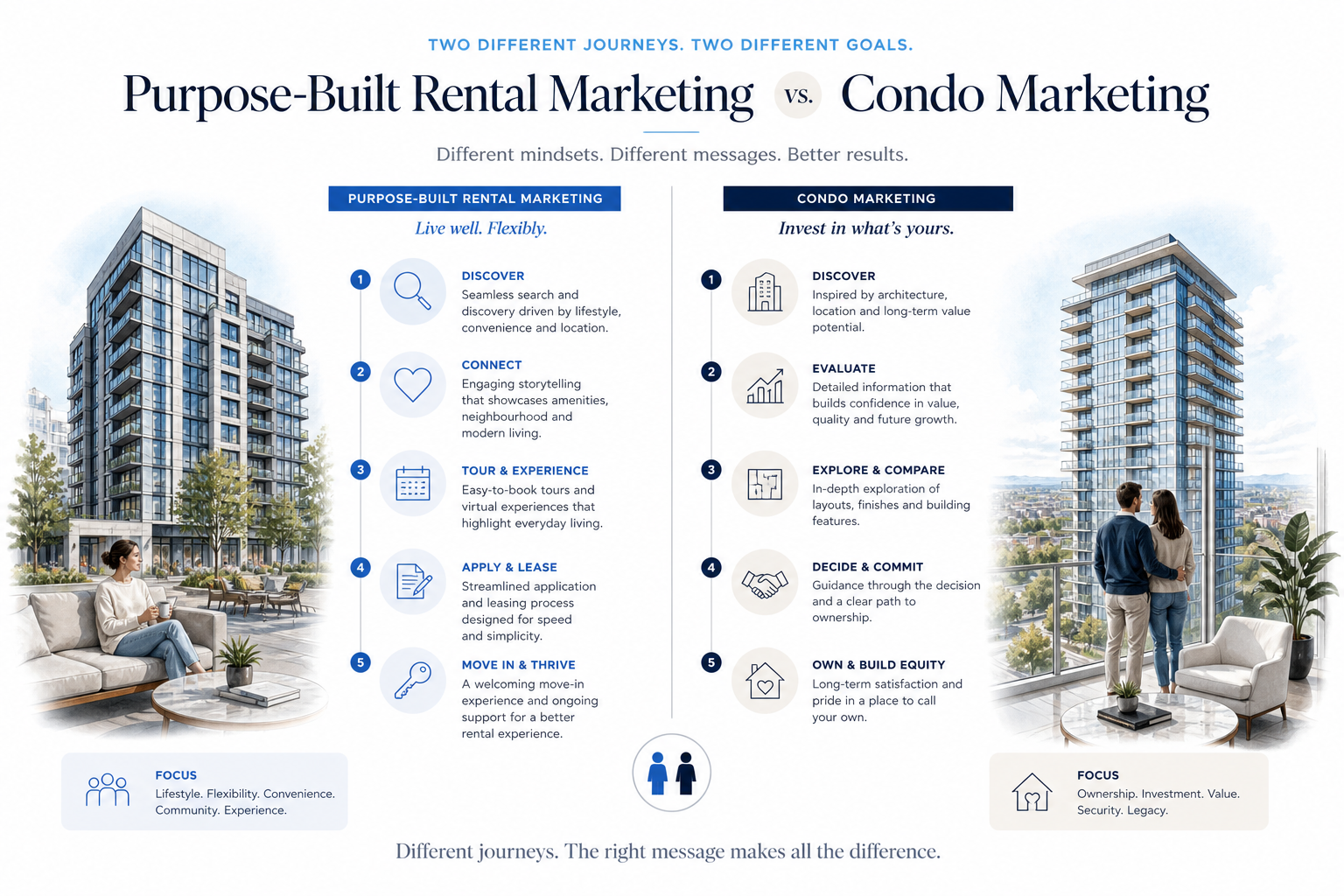
Purpose-built rental marketing should not mirror condo marketing because the audience, motivation, urgency, risk profile, and next step are different. Rental prospects are usually evaluating livability, convenience, timing, and ease. Condo buyers often weigh ownership, equity, long-term value, identity, and financial commitment. The journeys overlap in some places, but they are not the same journey.
A renter asks different questions
The rental decision is typically more immediate and more operational.
The prospect is often asking:
- Can I see myself living here soon?
- Is the building convenient for my routine?
- What is the monthly cost or range?
- How easy is the move-in process?
- Do the amenities and location fit my lifestyle?
- Is this building easier or better than the other options I am comparing right now?
A condo buyer may care about some of those same points, but usually adds a different layer:
- Is this a strong long-term ownership choice?
- How does the product compare as an investment?
- What does the developer's track record suggest?
- Does this feel like a durable premium or growth asset?
The emotional logic is different too. Rental is often about present-life fit. Condo is more often about long-term commitment, identity, or asset value.
Why copying a condo launch creates friction
When developers reuse condo logic for rental communities, the journey can become heavier than it needs to be.
Common problems include:
- too much emphasis on brand spectacle and too little on practical clarity
- weak visibility of current availability or pricing ranges
- not enough focus on move-in timing and leasing ease
- CTAs that feel built for sales registration instead of leasing momentum
- insufficient neighborhood and convenience framing
Rental prospects often compare many buildings quickly. They want the experience to help them sort fit fast.
That means the website should feel more immediate, more comparable, and more operationally helpful.
This is one reason high-converting real estate project websites need to be built around the actual buyer journey, not just the visual category of the project.
What rental marketing should emphasize
A strong purpose-built rental journey usually makes these elements easy to understand:
Condo marketing can carry more long-horizon narrative around ownership, future value, and identity. Rental marketing needs more immediate utility without becoming generic.
Branding still matters in rental
None of this means rental marketing should be plain.
Brand still matters because renters compare quickly, and many buildings offer similar layouts and amenities. Strong branding helps the community feel more memorable and more distinct.
But the brand has to support the leasing reality. It should make lifestyle, convenience, and day-to-day experience clearer, not bury them under condo-style aspiration.
This is also why real estate branding for developers should be treated as a system. The same brand principles can apply across rental and condo products, but the expression of the journey should change.
The website should support comparison, not fight it
Rental prospects usually compare multiple buildings in one session.
That means a strong rental website should help with:
- fast orientation
- easy unit-type browsing
- clear availability logic
- visible location context
- mobile usability
- quick path to enquire or book a tour
If the site is too slow, too abstract, or too sales-heavy, the prospect may simply move to the next property.
Final takeaway
Purpose-built rental is not simply condo marketing with a different contract.
The audience is making a different decision, under a different timeline, with different forms of risk and commitment.
Developers who respect that difference create smoother journeys, better-qualified leasing enquiries, and branding that feels more relevant to how renters actually choose where to live.


