



Real estate microsites for new developments work best when a project needs its own digital identity rather than a small page inside a broader corporate site. For developers, that decision matters because some projects need more than information. They need a standalone narrative, a clearer conversion path, and a dedicated environment that can support launch momentum.
That matters more as projects become more differentiated and more digitally marketed. Developers are increasingly using project-specific sites to create stronger launch focus, especially for premium, large-scale, or audience-specific developments. Public launch examples from luxury and master-planned projects continue to show how dedicated digital experiences help clarify positioning and support lead generation. Sources: Related Ross on the Edgeworth launch site, Red Oak Development Group on Moxie’s community launch, Escape Hatch lifestyle communities work.
For developers, the implication is practical. Not every project needs a microsite, but the right project can benefit from one significantly.
What a real estate microsite actually is
A microsite is a dedicated project website built around one development, one campaign, or one launch story. Unlike a general corporate website, it does not need to explain the entire developer brand ecosystem at equal depth. Its job is to focus attention on one specific offer.
That focus often makes microsites more useful when a project has:
- a distinct audience
- a stronger narrative angle
- premium or complex positioning
- a separate paid media strategy
- launch-specific assets and conversion goals
When a project needs its own website
When the project has a strong standalone identity
Some developments have enough character, design logic, or positioning strength to justify their own digital environment.
When the audience is highly specific
A project aimed at a particular investor segment, lifestyle buyer, or regional audience often benefits from a more focused site experience.
When the campaign needs message control
A microsite gives the team more freedom to structure storytelling, CTA hierarchy, and campaign continuity around one launch.
When the project is premium or high-stakes
Luxury, branded, or high-profile launches often gain from a more immersive, polished destination than a shared corporate template can provide.
What a microsite can do better than a generic project page
A project page inside a corporate site can still work well. But a microsite often does a few things better.
It can:
- create stronger emotional immersion
- reduce distraction from unrelated brand content
- support paid traffic more effectively
- adapt more closely to one campaign story
- give the project a clearer sense of presence
This is especially useful when the developer wants the launch to feel like an event rather than a listing.
When a microsite is the wrong choice
A microsite is not automatically the better option. It may be unnecessary when:
- the project is relatively simple
- the corporate site already handles project storytelling well
- the team cannot maintain another digital property properly
- campaign traffic volume does not justify the extra effort
In those cases, strengthening the main site may create more value than launching a separate destination.
What a strong project microsite should include
A good microsite still needs the same commercial fundamentals as any strong project website.
That usually includes:
- a strong hero section and clear project promise
- visual storytelling around architecture and lifestyle
- product explanation and practical details
- location context
- CTA logic tailored to launch goals
- brochure or information-request options
- mobile-friendly performance
The difference is that the whole structure is more tightly focused on one project rather than spread across many priorities.
How microsites support paid campaigns
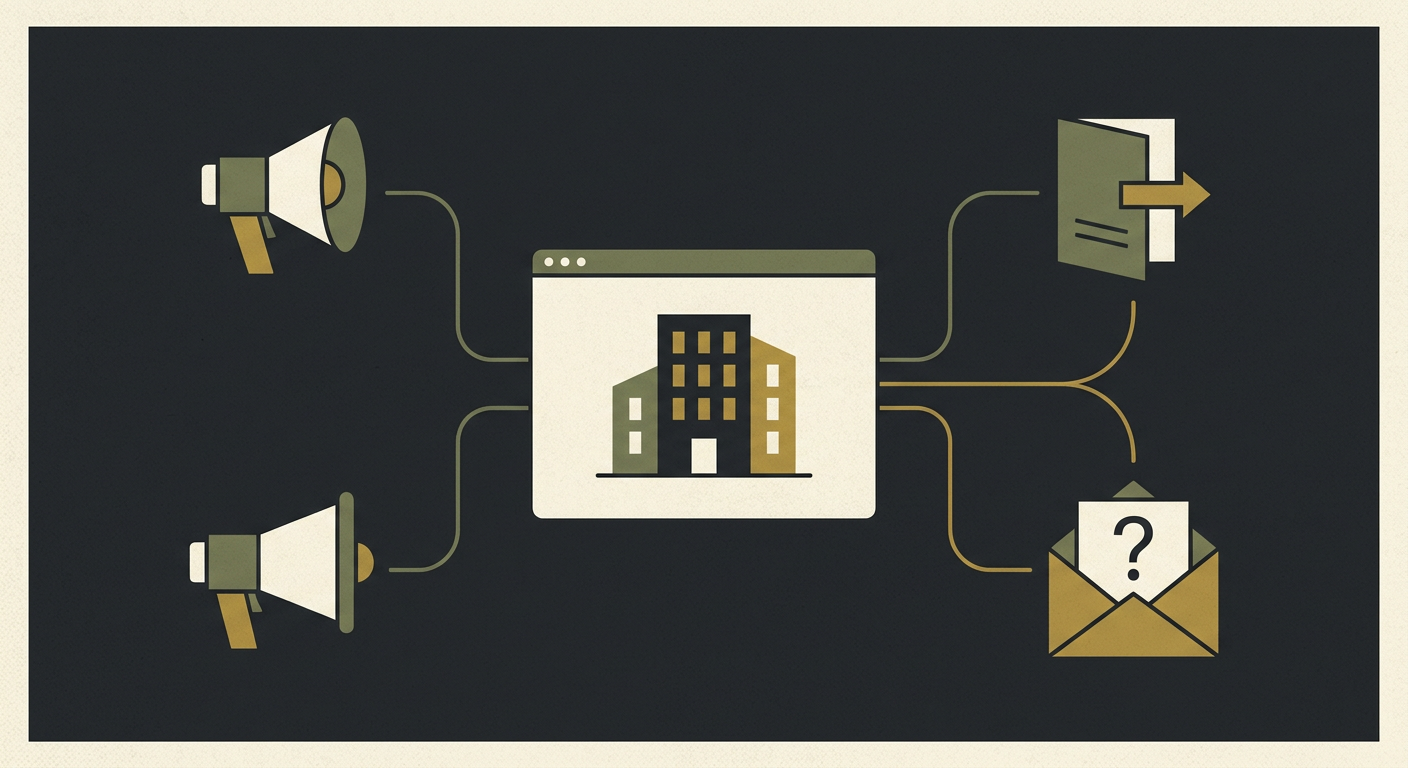
Microsites are often especially useful when the media strategy is highly focused. Instead of sending ad traffic into a broad website environment, the developer can direct visitors to a destination designed around the exact campaign promise.
That improves:
- message match
- visual continuity
- user orientation
- lead capture focus
This is one reason microsites often perform well alongside launch campaigns, brochure pushes, and project-specific email or social activity.
How the microsite should still connect to the wider brand
Even when a project has its own site, it should not feel disconnected from the developer’s identity.
The microsite should still reinforce:
- the quality of the developer brand
- the broader portfolio logic where relevant
- the wider expertise behind the launch
That is why public environments such as Velos Residence, Quatrimmo Vision, and MARKETIKA’s project portfolio are helpful references. The strongest project sites feel focused without losing brand credibility.

Common mistakes developers should avoid
Building a microsite without a distinct strategy
If the site is not meaningfully different from a regular project page, the extra effort may not be justified.
Treating it like a visual shell only
A microsite still needs strong page logic, trust-building, and conversion structure.
Disconnecting it from the brand
Project focus is useful, but the developer behind the project still needs to feel credible.
Forgetting post-launch maintenance
A neglected microsite can quickly feel dated, especially if it carries active campaign traffic.
FAQ
When does a real estate project need its own microsite?
Usually when the project has a strong standalone identity, premium positioning, or a focused launch campaign that benefits from a dedicated environment.
Is a microsite better than a project page?
Not always. It depends on the project’s complexity, budget, audience, and campaign goals.
Do microsites help conversion?
They can, especially when they improve message match and reduce distractions around one project-specific action path.
How can MARKETIKA help?
MARKETIKA can decide whether a project needs a microsite at all, then connect brand strategy, visuals, UX, and conversion logic into a launch-ready digital environment.
Final takeaway
Real estate microsites are most useful when a project needs its own digital stage. They help developers focus story, traffic, and conversion around one specific offer in a way that a broader corporate site cannot always do as effectively.
For the right project, that focus can make the launch feel clearer, stronger, and more commercially intentional.