


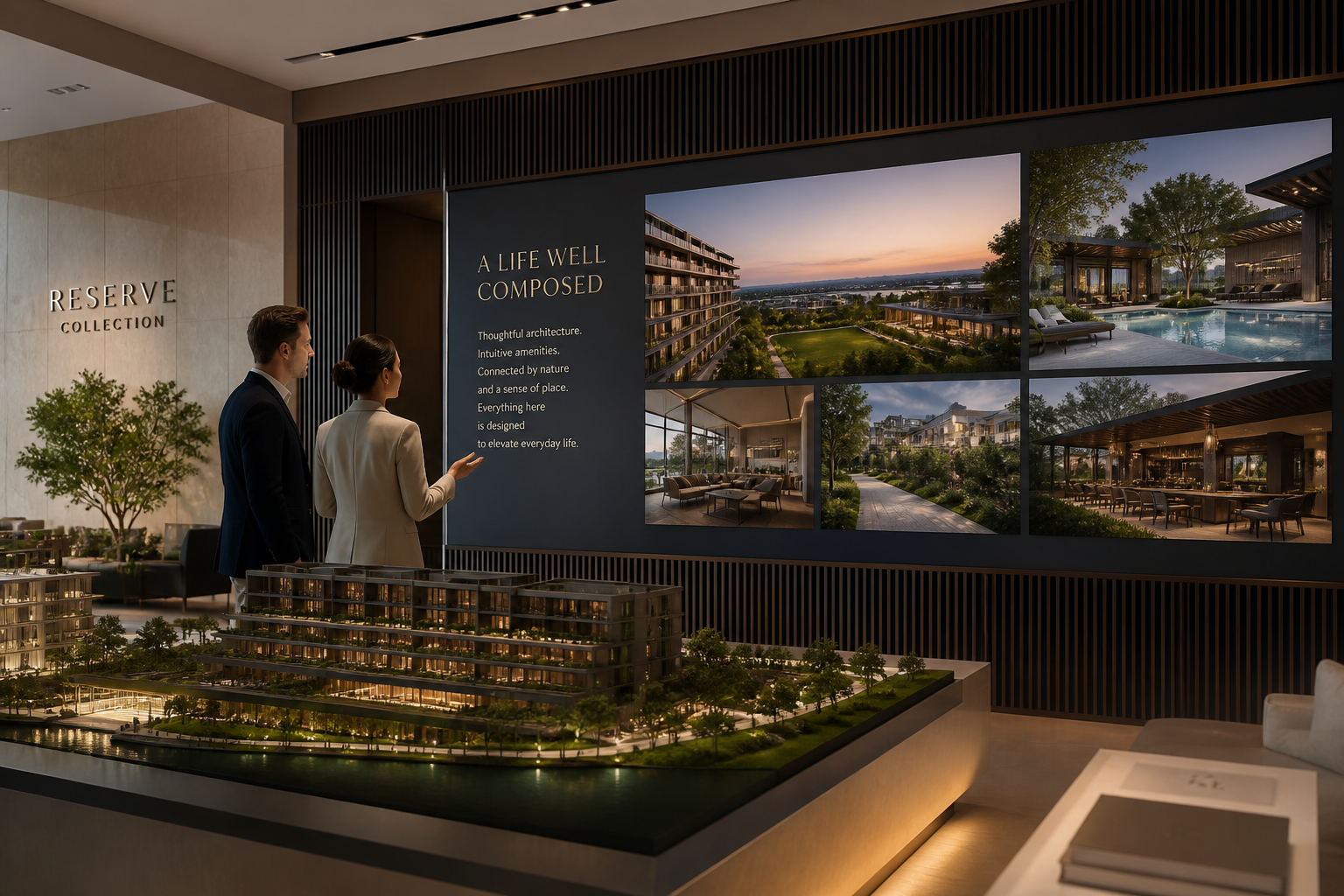
A rooftop pool, coworking lounge, wellness room, gym, concierge desk, and smart-home package may all be valuable.
But if every competing project offers roughly the same list, those amenities do not automatically make your development different.
This is one of the most common problems in real estate marketing. Developers build a long features list and assume the list itself explains the value of the project. It rarely does.
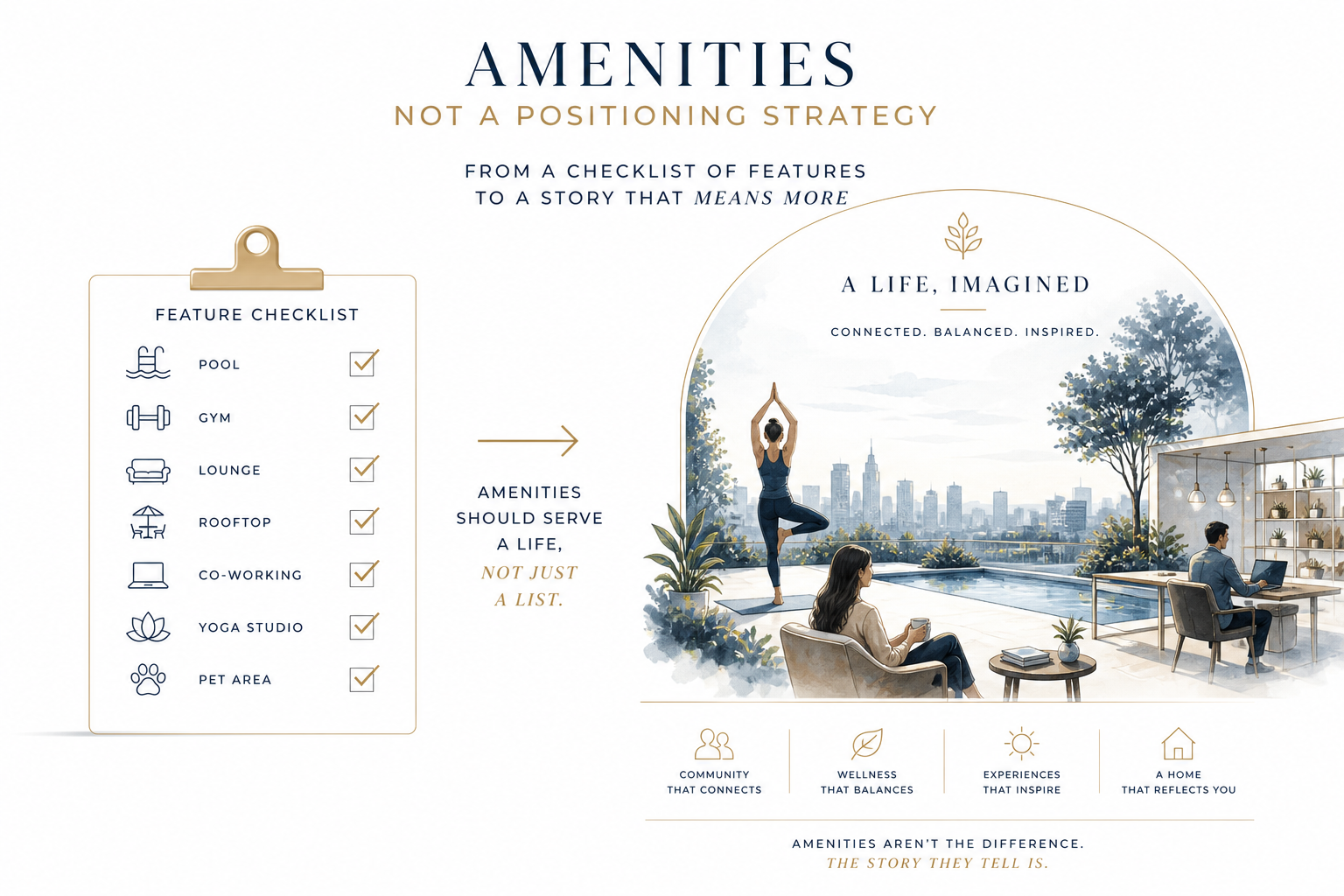
Amenities matter, but they are not a positioning strategy on their own. Positioning begins when the developer explains why certain features matter to a specific buyer, routine, lifestyle, or ownership logic. A checklist describes what exists. Positioning explains why it deserves preference.
Why amenity lists start to sound the same
Most developments compete within a category.
That means a large part of the amenity package becomes table stakes very quickly. Buyers come to expect fitness spaces, social lounges, children's areas, work-friendly zones, and outdoor gathering spaces in many mid-to-upper-tier products.
Once an amenity becomes expected, simply mentioning it does very little strategic work.
The audience still needs to know:
- Who is this really for?
- What kind of lifestyle is being supported?
- Which amenities actually shape daily experience?
- Why does this set of features feel more relevant here than somewhere else?
That is why luxury and premium branding for developers should start with strategic framing, not just inventorying the feature stack.
Features become stronger when they are connected to meaning
The real job is to interpret the amenity.
For example:
This is where a feature stops being generic and starts becoming part of a real story.
Not every amenity should lead the message
Some amenities are important because buyers expect them.
Others genuinely shape the identity of the project.
The developer's task is to decide which is which.
That means separating:
- table-stakes amenities that signal category fit
- differentiating amenities that support the project story
- proof-point amenities that help justify positioning
When everything is treated as equally important, the message becomes flat.
Amenities should support the buyer journey too
Amenities are not only marketing content. They also influence which visuals, floorplans, sales materials, and website sections deserve priority.
A building targeting urban professionals may need coworking, mobility, and flexible social spaces to appear earlier in the journey.
A family-led project may need more emphasis on play, storage, parking convenience, and daily routine support.
A premium wellness-led development may need recovery, privacy, and service-oriented spaces framed differently from a nightlife-oriented tower.
This is also why buyer questions should shape the website and project websites should answer real lifestyle decisions. The meaning of the amenity matters more than the mere presence of it.
Common amenity mistakes in developer marketing
The same issues show up repeatedly:
- listing amenities without buyer interpretation
- using the same order and emphasis as every competitor
- promoting features before clarifying the audience
- relying on amenity volume as a substitute for positioning
- not distinguishing between expected and truly meaningful features
None of this means amenities are unimportant.
It means they need a strategic role.
Final takeaway
Features matter.
But features need meaning.
The strongest real estate marketing explains not only what the project includes, but why those choices make the development more relevant to the buyer. Amenities support positioning when they are interpreted through the life, identity, and priorities of the audience. Without that, they remain a checklist.


