


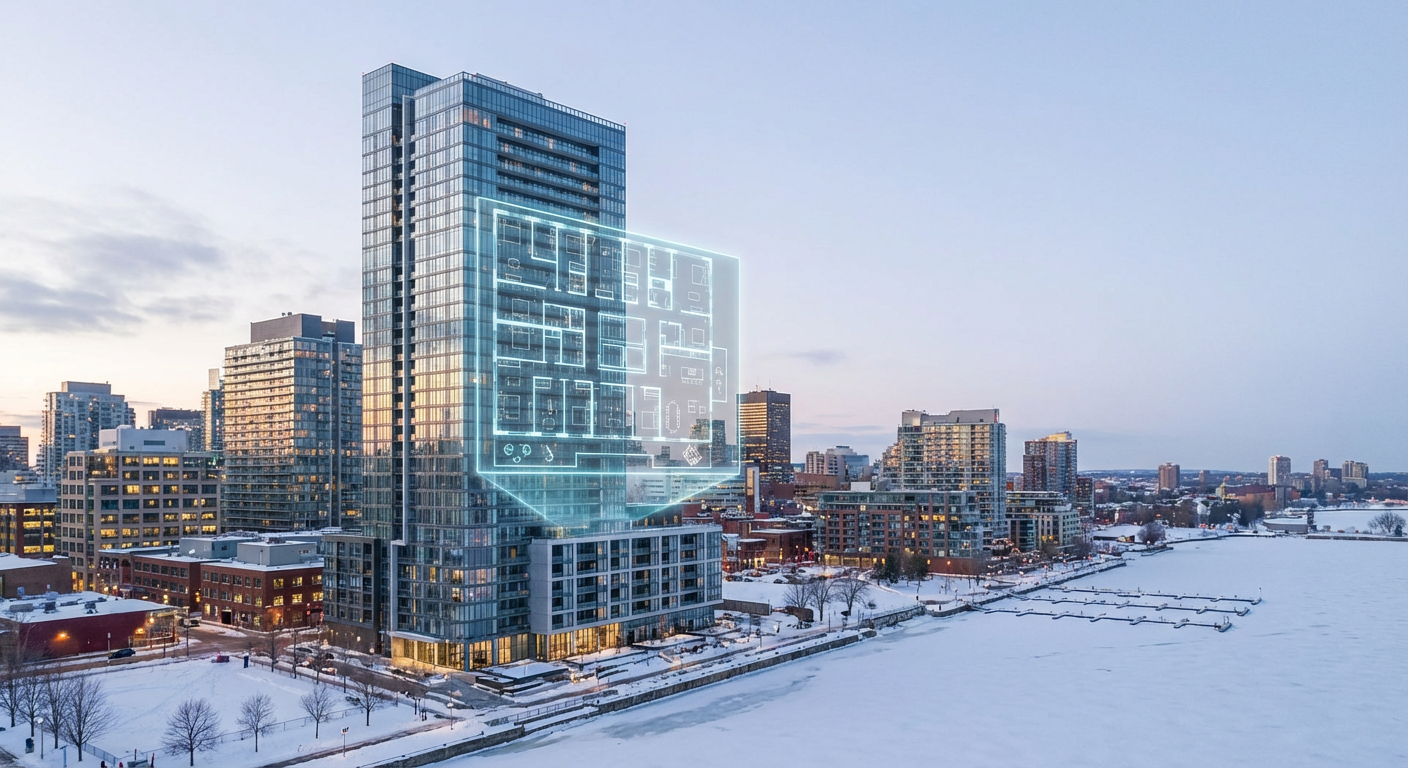
Canadian developers are facing a quieter but equally important shift in buyer expectations. Interactive 3D is moving from a premium extra to a standard part of serious project marketing, especially for presale condos, mixed-use projects, and communities where buyers need to understand value before construction is complete.
The logic is straightforward. Buyers want more clarity before they commit. Matterport reported that listings with 3D tours sold up to 31% faster and for up to 9% higher prices, while Zillow’s consumer housing research found that 70% of buyers believe 3D tours provide a better understanding of space than static photos and 65% wish more listings included them. Sources: Matterport research on 3D tours, Zillow 2025 Consumer Housing Trends Report.

For Canadian developers, that expectation is especially relevant because many purchases involve longer consideration cycles, more due diligence, and more buyer anxiety around future delivery.
Why interactive 3D fits the Canadian market
Canada’s presale environment often requires buyers to make decisions with limited physical access to the finished product. Marketing teams are asking people to imagine future interiors, amenity quality, tower placement, and neighborhood context long before the project is complete.
Interactive 3D closes that gap in four practical ways.
It reduces uncertainty
A static brochure can show beauty, but it rarely answers the buyer’s real questions. An interactive 3D experience can show layout flow, view direction, amenity relationships, and the overall feel of the space more clearly.
It supports remote decision-making
Not every buyer can visit a presentation centre at the right moment. That is true for investors, relocators, and international buyers, but also for local buyers comparing multiple presale opportunities around work and family schedules.
It helps sales teams explain complex projects
Mixed-use communities, phased towers, and premium amenity stories are easier to communicate with unit explorers, 3D maps, and walkthroughs than with a sequence of PDFs.
It creates a stronger premium signal
Developers who present projects through polished digital experiences often feel more credible. In competitive urban markets, that matters.
What interactive 3D should include
Many teams still think too narrowly about this category. For developers, interactive 3D usually means a stack of tools rather than one asset.
- Photo-real CGI for exteriors and key interiors.
- Interactive walkthroughs for important unit types.
- Masterplan or tower navigation tools.
- Unit selectors with filters for size, level, exposure, or availability.
- Sales-ready screens or tablet tools for broker and showroom use.
This is why developers increasingly need partners who combine visualization, branding, and sales-focused web design rather than outsourcing each layer in isolation.

Where Canadian developers see the biggest gains
Presale condo launches
Interactive 3D helps buyers understand why one stack, one floor, or one corner unit is more valuable than another.
Master-planned communities
When a project unfolds in phases, buyers need a stronger sense of the whole ecosystem. Interactive maps and phased storytelling make that far easier.
Urban infill projects
In dense cities, view logic, context, and amenity adjacency matter. 3D helps communicate these details faster than text-heavy sales materials.
Broker enablement
Brokers work better when they can show, not just tell. A strong digital toolkit helps them qualify buyers faster and present the project more convincingly.
Why static assets alone are no longer enough
Static imagery still matters, but it cannot do all the work. Buyers now expect a more interactive research process, especially for high-consideration purchases.
This is not just about novelty. It is about decision confidence. The clearer the project feels, the easier it is for a buyer to move forward.
That expectation also aligns with what sophisticated digital buyers now want from all premium brands: better personalization, smoother digital journeys, and stronger consistency across touchpoints. Adobe’s 2025 digital trends reporting showed 78% of customers want consistent brand experiences across touchpoints, while organizations using AI-driven personalization reported stronger engagement. Source: Adobe 2025 digital trends report.
What developers should avoid
The biggest mistakes are usually strategic, not technical.
- Treating interactive 3D as a gimmick instead of a conversion tool.
- Building an impressive tour with no clear path to enquiry.
- Using visuals that are disconnected from the website and sales story.
- Forgetting broker and internal sales usability.
How to roll it out intelligently
A sensible rollout is usually phased.
- Start with the most commercially important unit types and views.
- Build the website around the buyer journey, not around internal departments.
- Add interactive layers where they genuinely reduce friction.
- Connect all forms and interactions to a CRM so sales teams can act quickly.
Developers looking for practical references can study MARKETIKA’s interactive 3D and developer website portfolio, including work that bridges sales tools, premium presentation, and launch-ready digital journeys.
Final takeaway
Interactive 3D is becoming standard for Canadian developers because it answers the buyer’s biggest question: can I trust what I am buying before it exists?
In a market where projects must feel credible, usable, and easy to understand, the developers who invest in better digital explanation will create an edge long before construction finishes.