


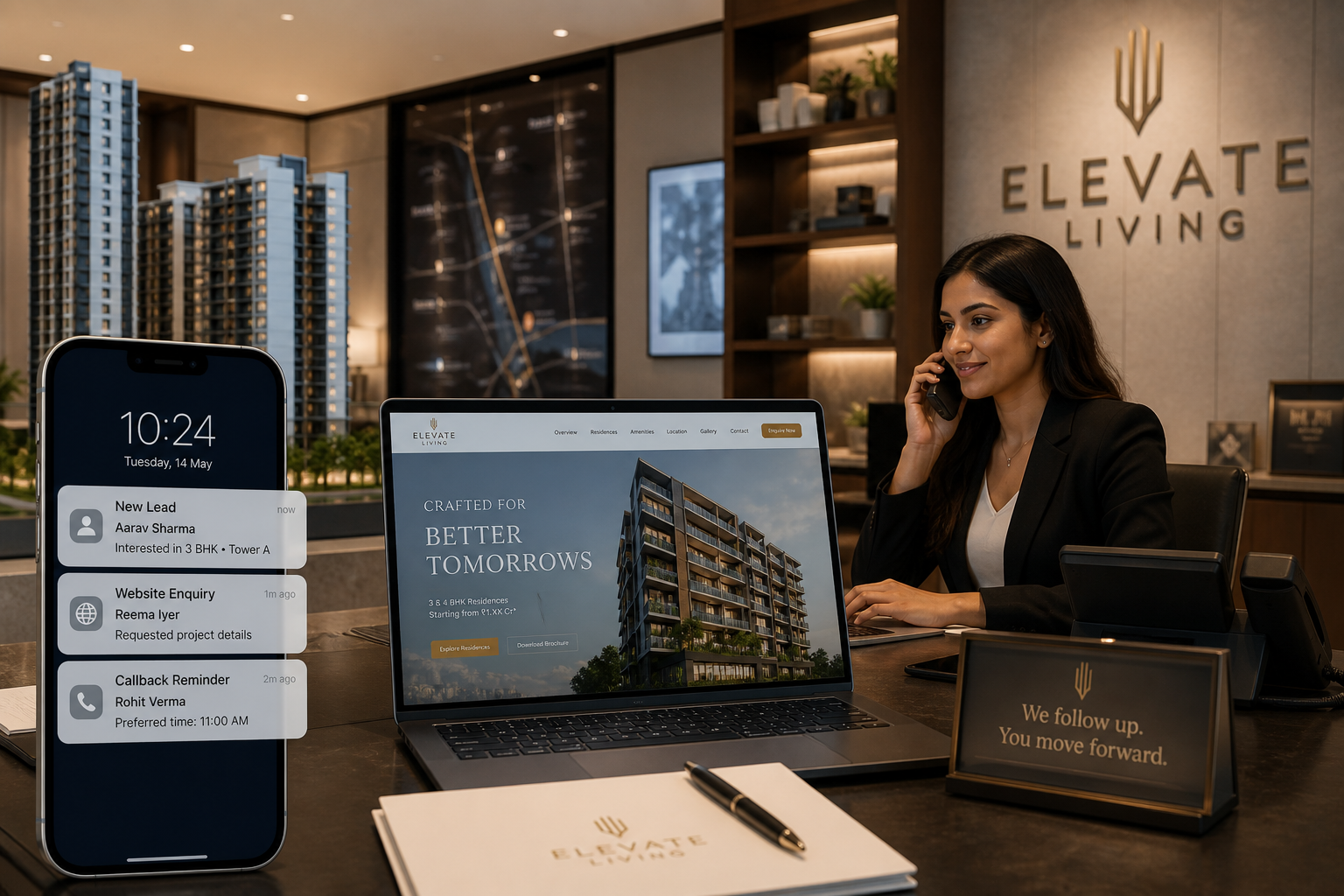
A premium campaign can create interest in seconds.
A slow follow-up can weaken that impression just as quickly.
This is why response speed should not be treated as a back-office sales metric alone. In real estate development, it is part of the brand experience. Buyers do not separate the ad, the website, the form, the confirmation email, the sales call, and the presentation centre into separate departments. They experience one company.
If the marketing feels polished but the follow-up feels slow, generic, or disorganized, the brand promise loses credibility.
Buyers do not separate brand from service
Brand is often discussed as if it lives only in visual identity, tone of voice, or campaign quality.
In practice, buyers form their judgment through the full sequence of interaction.
That includes:
- how quickly someone replies
- whether the reply feels relevant
- whether the team already knows what the buyer asked for
- whether the handoff between marketing and sales feels smooth
- whether the next step is clear
A developer may spend heavily to create a premium first impression, then quietly damage that impression with weak response behavior.
That is why service rhythm belongs inside the brand conversation.
Speed matters most when intent is high
Not every lead requires the same handling.
A brochure download and a request to reserve a specific unit do not carry the same urgency. A prospect comparing options casually is different from a buyer who wants availability today.
The stronger approach is not to chase one universal response target. It is to define standards by intent level.
This is where response speed becomes strategic rather than reactive.
Timely follow-up protects demand value
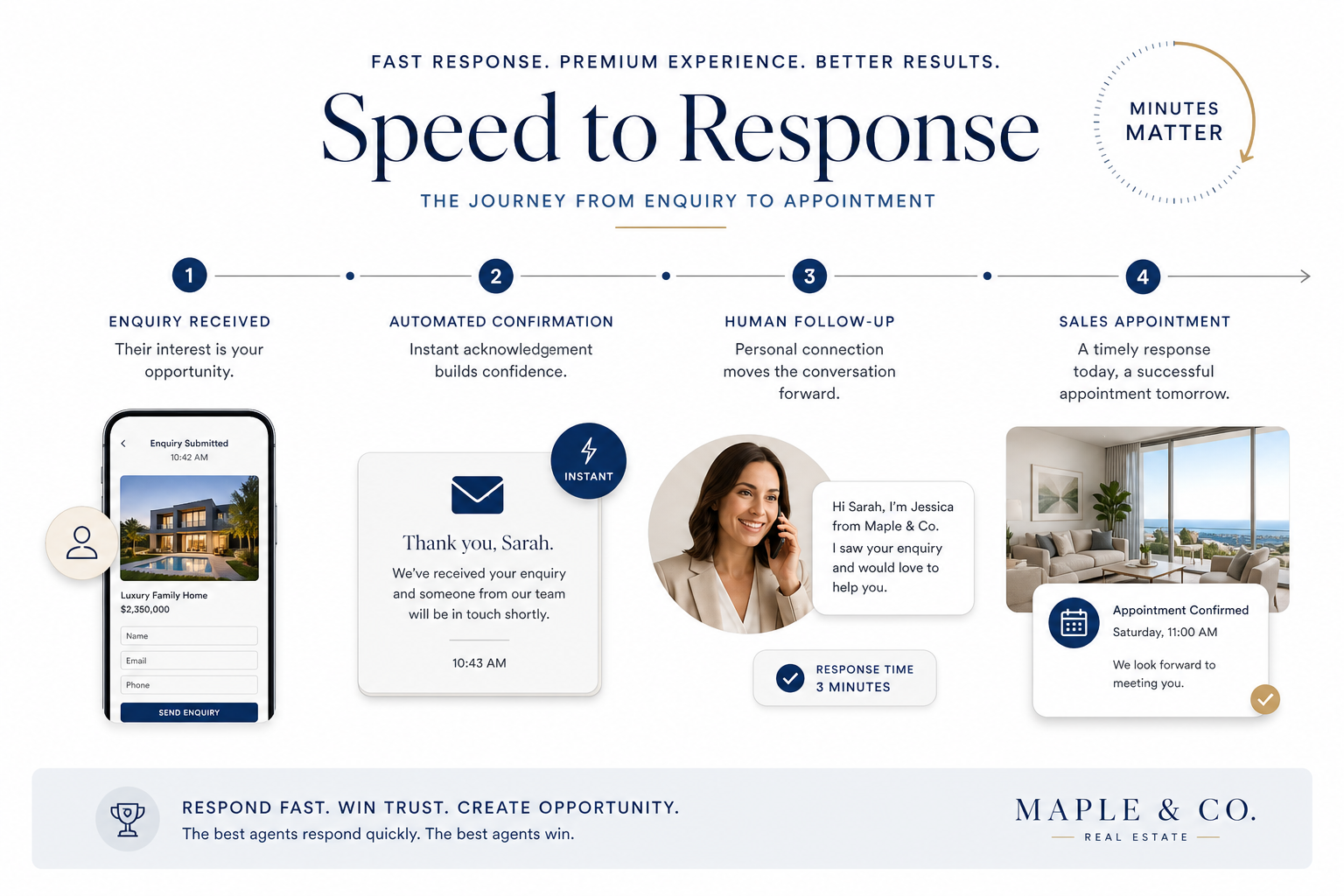
Delayed response does not only feel less professional. It can reduce the value of the lead itself.
Harvard Business Review's analysis of online sales leads remains a useful reference here. The core lesson is simple: interest decays quickly when follow-up lags.
In developer marketing, that has several consequences:
- hot leads cool down
- competing projects fill the gap
- the buyer forgets why they were interested
- the team loses the context of the initial moment of intent
The cost of delay is rarely visible in one dramatic failure. It shows up as quieter underperformance across campaigns, conversion, and buyer confidence.
Relevance matters as much as speed
Fast is not enough if the response feels generic.
A buyer who just explored a specific project page, viewed a certain unit type, or requested pricing expects some continuity. If the follow-up feels like a cold restart, the journey breaks.
This is why CRM integration for real estate websites matters so much. Sales teams need context, not just contact details.
Relevant response usually means the team knows:
- source channel
- project interest
- possible unit or product interest
- CTA used
- urgency level
- preferred contact path, where available
That lets the first reply feel more human and more organized.
Automation should support the relationship, not replace it
Some teams resist automation because they fear it will make the brand feel robotic.
Used well, automation does the opposite.
A confirmation email, internal alert, routing rule, or calendar prompt can make the experience feel more responsive, not less personal. The key is to use automation for speed and consistency, while keeping high-value conversation human.
This is also consistent with MARKETIKA's view of real estate digital sales funnels: follow-up is not a separate afterthought. It is part of the full conversion system.
Where slow response usually starts
The problem is not always the sales team itself.
Slow response often comes from upstream issues such as:
- forms not routing properly
- unclear ownership of new leads
- disconnected tools
- lack of prioritization by intent level
- after-hours gaps
- missing context in the CRM
That is why brand-aligned response requires operational design, not just better rep discipline.
A practical response standard for developers
A strong operating model usually includes:
- clear lead categories by intent
- routing rules by project, team, or buyer type
- immediate confirmation for every enquiry
- rapid follow-up for high-intent actions
- context visible to the sales team before contact
- review of response performance alongside marketing data
When these pieces work together, response speed stops being random.
It becomes part of the developer's reputation for seriousness.
Final takeaway
Brand is not only what the project looks and sounds like.
It is also what happens after the buyer raises their hand.
Developers who respond quickly, clearly, and with context create a stronger impression of organization, credibility, and care. In markets where trust and timing both matter, that is not a small operational detail. It is part of the brand itself.


