



Developers spend heavily to attract attention.
But too often, the most valuable knowledge about that attention stays trapped inside ad platforms, broker channels, spreadsheets, or disconnected tools. One campaign knows where the click came from. Another system holds the enquiry. A sales rep knows what the buyer actually wanted. None of it connects cleanly.
That is a problem.
First-party data is not just a technical asset. It is strategic memory. It helps a developer understand who engaged, what they cared about, which projects attracted serious intent, and how one launch can make the next one smarter.
What first-party data really means for developers
In practical terms, first-party data includes information collected directly from your own audience and systems, such as:
- website registrations
- CRM records
- project and unit interests
- campaign source and landing-page context
- email engagement
- event sign-ups
- buyer questions and objections
- appointment and reservation outcomes
Individually, these signals are useful. Connected together, they become much more valuable.
A developer launching multiple projects over time should not think only in campaign snapshots. It should think in audience intelligence.
Why ownership matters
When first-party data is structured well, the developer becomes less dependent on outside platforms to understand its own market.
That creates several advantages:
Better visibility into demand quality
A platform may tell you it generated leads. Your own data should tell you whether those leads were actually useful.
Smarter future launches
Past prospects, investors, buyers, brokers, and referral partners do not disappear after one project. If the relationship is preserved properly, each launch can benefit from what the last one learned.
More control over audience relationships
Algorithms change. Ad costs shift. Third-party access becomes more limited. A developer with stronger direct audience knowledge keeps more control over its next move.
Better coordination between sales and marketing
This is one reason CRM integration for real estate websites matters so much. If first-party signals do not flow into a usable system, the developer still pays for attention without really owning the learning.
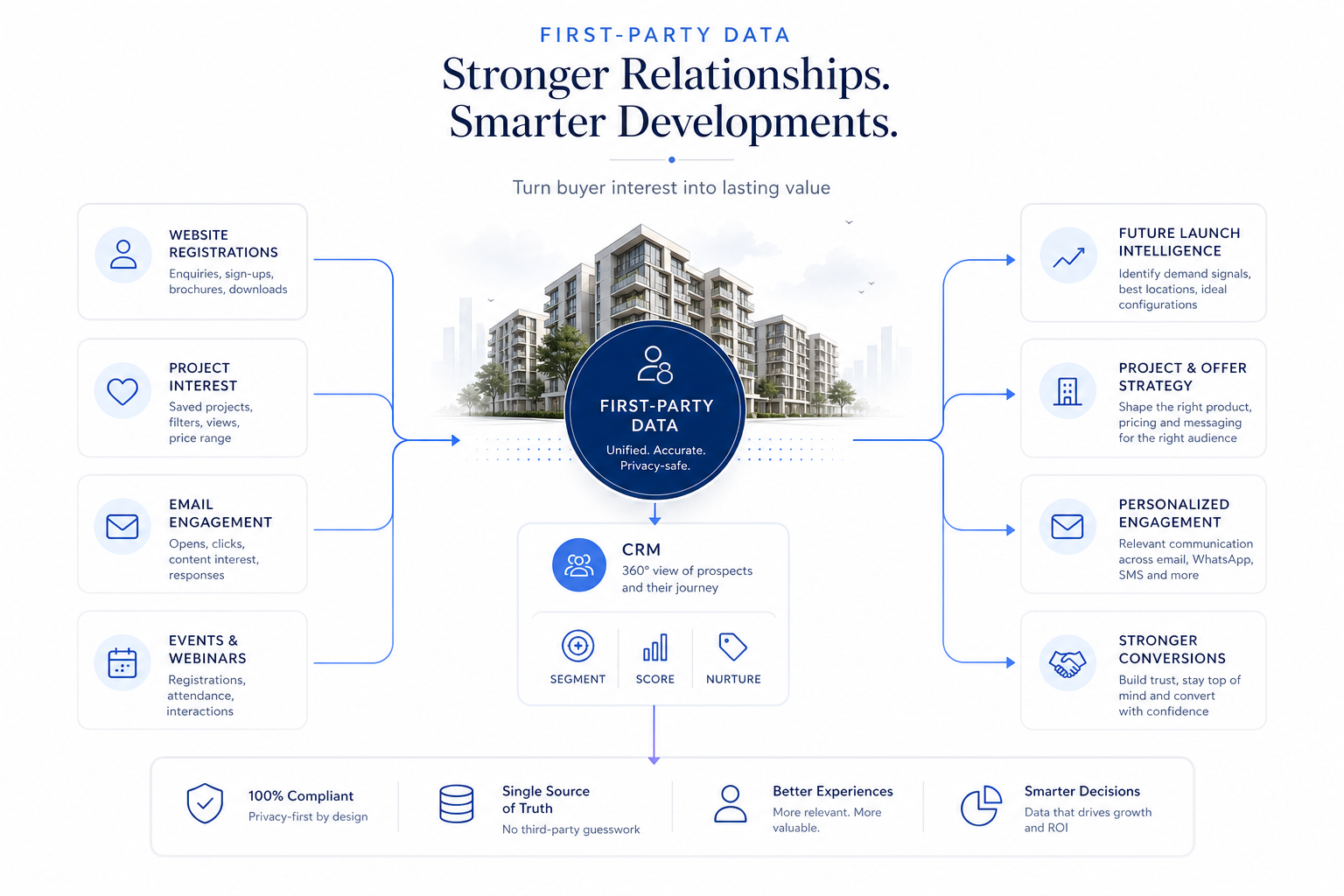
First-party data is what makes launches compound
One of the biggest missed opportunities in real estate marketing is treating each project as if it begins from zero.
In reality, one launch should strengthen the next.
A developer that owns better first-party data can begin to see patterns such as:
- which markets produce the best-fit demand
- which product types attract investor versus end-user interest
- which content and CTAs convert stronger audiences
- which objections repeat across launches
- which contacts should be re-engaged for future phases
That kind of continuity is hard to build if the audience remains scattered across disconnected systems.
This is also consistent with MARKETIKA's perspective on lead generation for real estate developers. The goal is not to rent attention forever. It is to turn attention into reusable commercial intelligence.
What developers should own first
Teams do not need a giant data transformation project before improving.
A practical starting point usually includes:
- reliable CRM capture from websites and landing pages
- clean source and campaign tagging
- project and unit-interest tracking
- email engagement tied back to contact records
- sales-stage visibility after enquiry
- a way to segment prospects for future launches
Even modest progress on these areas makes later decisions more grounded.
Common mistakes with first-party data
The most common problems are straightforward:
- collecting data no one uses
- failing to connect website and CRM behavior
- keeping audience knowledge inside agency reports instead of the developer system
- not tagging projects, sources, and intent clearly
- treating past leads as expired instead of reusable intelligence
The strongest developers do not simply collect more data.
They structure the right data so it can improve decisions.
First-party data also strengthens owned channels
When audience knowledge improves, so do the channels the developer controls directly:
- email becomes more segmented and useful
- websites can adapt to better buyer questions
- future campaigns target with more discipline
- broker communication becomes more informed
- sales teams inherit better context
That makes the whole system more efficient.
Final takeaway
Every launch should do more than market the current project.
It should also make the developer smarter about the next one.
First-party data is what allows that learning to stay in the business instead of leaking out through disconnected tools and third-party platforms. Developers who own it well create better follow-up, better targeting, and stronger momentum from one launch to the next.


