


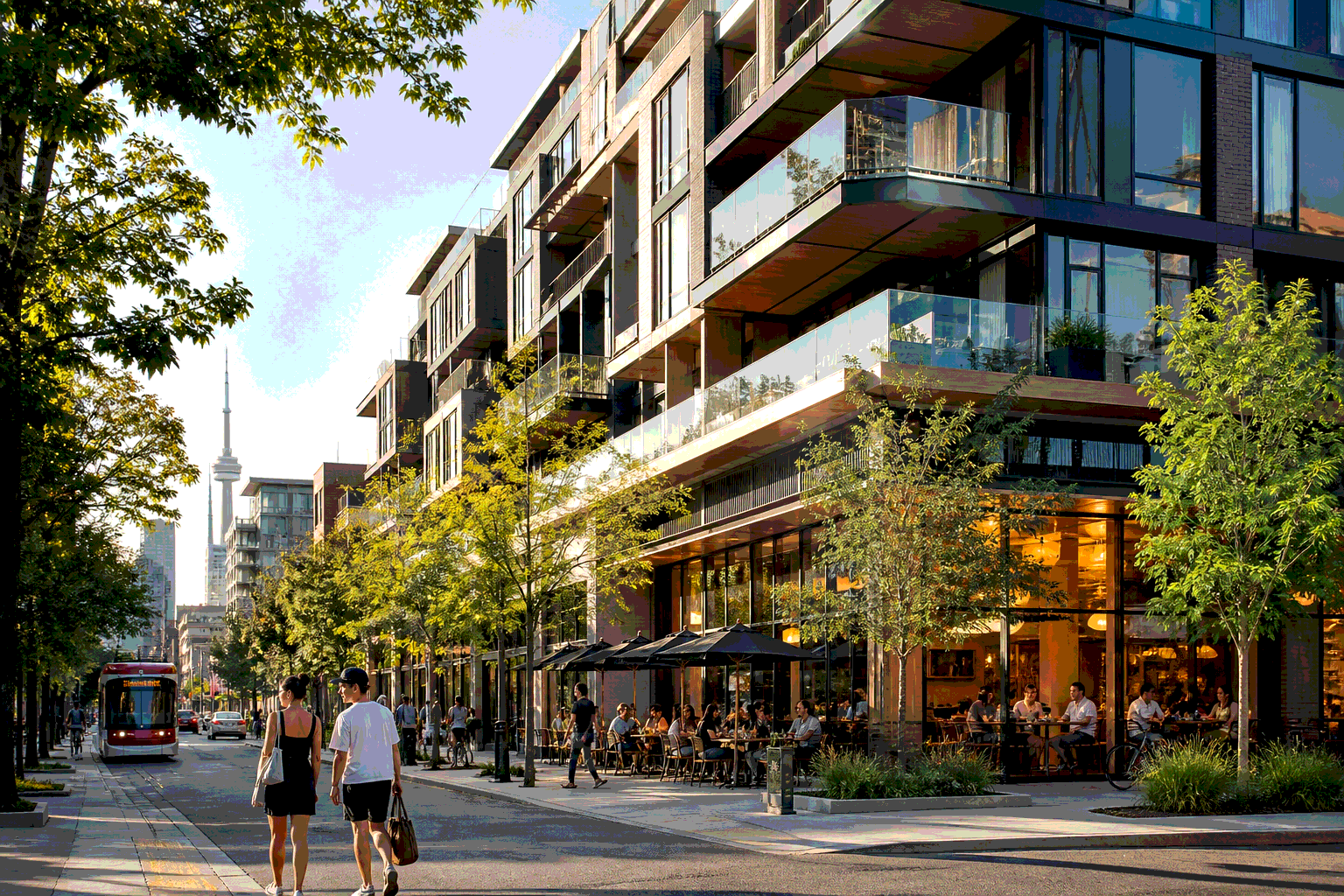
Neighbourhood marketing works best when it helps buyers understand why this project belongs in this place, and why that place matters to their life, priorities, or investment logic. The problem is that many real estate websites still treat location content like a checklist: a map, a few restaurant names, a transit callout, and a sentence about being in the heart of it all.
That usually adds information without creating meaning.
For developers, neighbourhood content needs to do more than decorate the page. It should help the right buyer understand the lived value of the project. NAR's 2025 Home Buyers and Sellers profile shows how practical those decisions are: buyers increasingly start online, 70% use mobile or tablet devices, and neighbourhood quality remains one of the most important filters in housing decisions. NAR's 2025 Generational Trends Report also notes that convenience to work and commuting costs matter strongly for younger buyers. In other words, location is not background detail. It is part of the product.
A strong project website should therefore translate neighbourhood context into buyer relevance, not into generic lifestyle filler.
Why so much neighbourhood content feels interchangeable
Most location pages fail for a simple reason. They describe the area, but they do not interpret it.
A list of schools, cafes, gyms, waterfront paths, metro stations, or cultural venues may be factually useful. But if the page does not explain why those details matter for this project's audience, the section starts to feel copied from every other launch in the district.
That is how developers end up with phrases like:
- close to everything
- in the heart of the city
- steps from dining and retail
- connected to major destinations
None of those claims are necessarily false. They are just too generic to create distinction.
MARKETIKA's article on how to build high-converting real estate project websites touches the same issue from a wider perspective. Buyers are screening several options quickly. If the location story sounds interchangeable, the project becomes easier to forget.
Start with the buyer, not with the map
The same neighbourhood can mean very different things to different audiences.
A family buyer may care about parks, schools, stroller-friendly routes, and daily convenience. A downsizer may care about walkability, dining, culture, and low-friction urban living. An investor may care about district momentum, tenant appeal, transit, and long-term demand. An international buyer may need the city explained from first principles, not from local shorthand.
That is why the first task is not gathering landmarks. It is clarifying the buyer lens.
Before writing a location section, developers should ask:
- who is the most likely buyer for this project
- what kind of daily routine or aspiration matters most to them
- which local details genuinely support that promise
- which details may be true, but commercially unimportant
This is one reason the digital journey for international buyers needs more than a map pin. Distant buyers often need macro and micro context at the same time, including what the district is like, how it connects, and why locals value it.
Translate place into daily value
Good neighbourhood marketing explains what life in the area feels like without dissolving into vague mood language. It turns local facts into usable meaning.
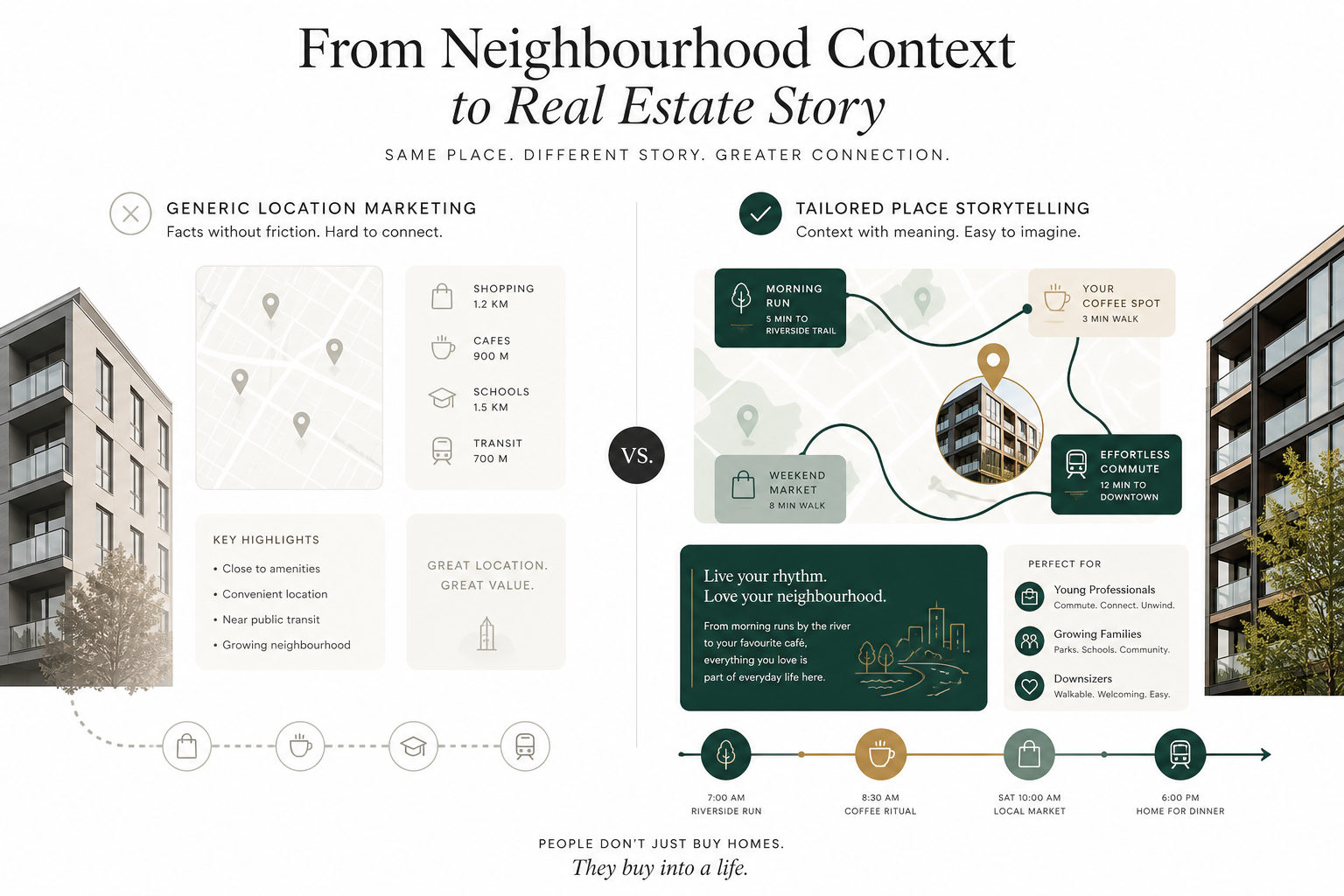
Instead of saying the project is close to transit, explain what kind of movement that enables. Instead of saying it is near retail, explain whether the area supports daily convenience, destination shopping, or weekend leisure. Instead of saying it is a desirable district, explain what creates that desirability: established prestige, waterfront access, school reputation, emerging cultural energy, or business connectivity.
The simplest test is this: if you remove the project name and paste the same location copy onto a competing website nearby, would it still fit? If yes, the content is not specific enough.
Build a neighbourhood story in layers
The best location sections usually combine several layers of explanation.
1. The macro context
Start with the city, submarket, or district logic. Why does this part of the city matter right now? Is it established, emerging, highly connected, family-led, design-led, or investment-active?
2. The local pattern of life
Move closer. What does daily life actually look like within a short radius of the project? This is where walking routes, schools, waterfronts, transit nodes, retail corridors, office clusters, and hospitality anchors become more meaningful.
3. The project-specific fit
Finally, connect the neighbourhood back to the development. Why does this exact project make sense here? Does the architecture respond to the district? Does the unit mix fit the area? Does the positioning align with how people already use the neighbourhood?
This layered approach fits neatly with MARKETIKA's thinking on project websites before pricing is final. Even at early launch stages, location can do a large share of the confidence-building work if it feels clear and specific.
Use original curation, not directory logic
A strong neighbourhood page should feel curated. That does not mean writing more. It means choosing better.
Useful location storytelling may include:
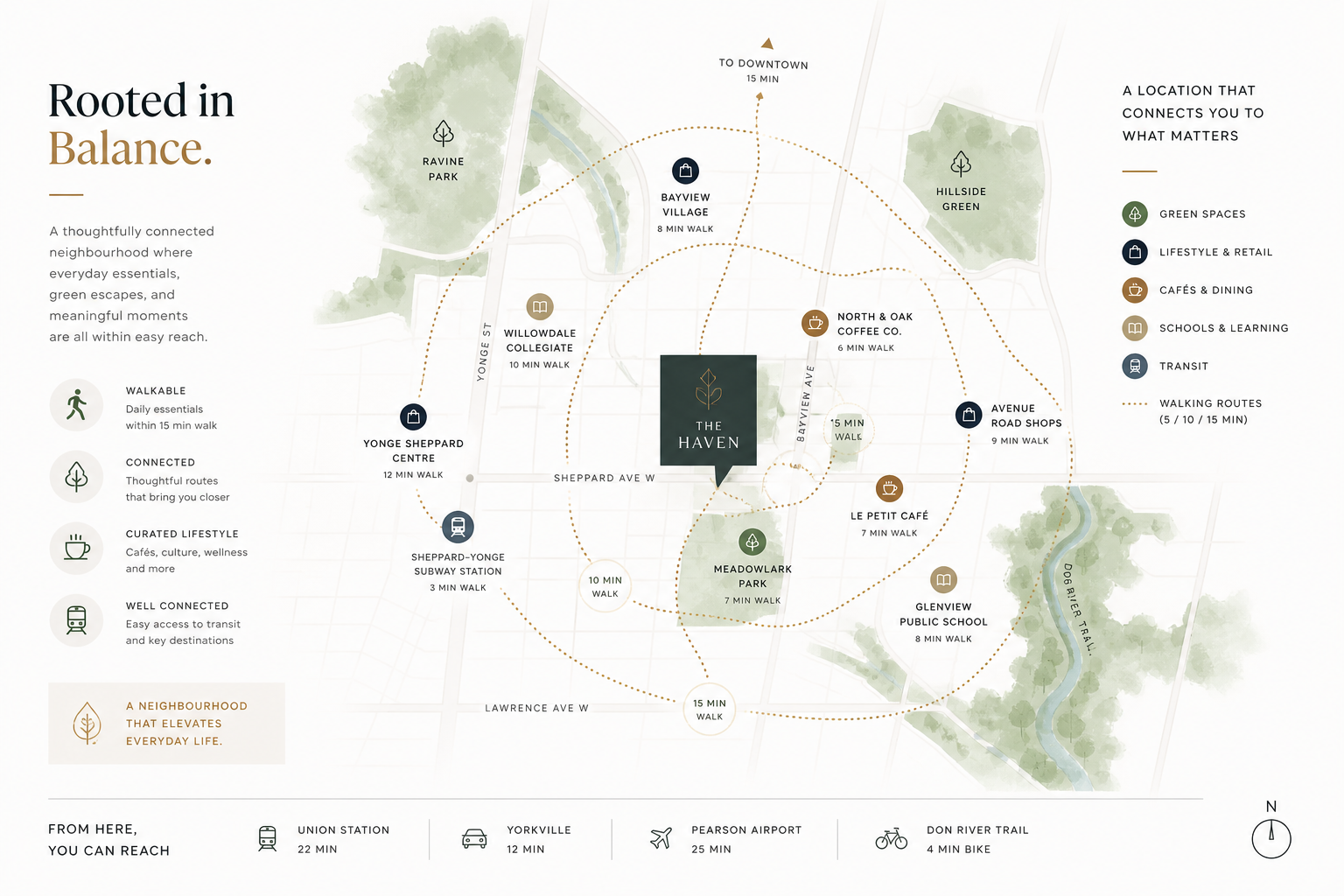
- a map that prioritizes meaningful destinations rather than every possible pin
- short editorial commentary on why certain places matter
- walking or driving-time logic tied to real routines
- photography or visual storytelling that reflects the actual atmosphere of the area
- route-based explanations such as waterfront path to downtown, school run convenience, or airport access for frequent travelers
Broader local-search research from Google and Ipsos and Google's mobile design guidance reinforces the same behavior pattern. Users looking for local information want to understand location, direction, relevance, and next steps quickly, especially on mobile. For developers, that means neighbourhood content should be legible and useful, not buried inside a decorative section.
Make the neighbourhood support the brand story
The strongest projects do not merely sit in a neighbourhood. They belong to it in a way that reinforces the brand promise.
A design-led urban residence may need a location story centered on culture, architecture, and walkable city rhythm. A family-oriented community may need a stronger emphasis on schools, green space, and practical routines. A premium waterfront or golf-adjacent project may need to connect place, status, and daily experience much more intentionally.
This is where MARKETIKA's real estate developer branding blueprint becomes relevant. The digital experience is stronger when brand, architecture, neighbourhood, and buyer journey reinforce one another rather than behaving like disconnected layers.
Common mistakes developers should avoid
The fastest ways to weaken neighbourhood marketing are usually predictable:
- listing too many places without hierarchy
- using stock lifestyle language that could fit any project
- talking about proximity without explaining practical value
- ignoring the target buyer's routine and priorities
- showing a map but not interpreting the area
- letting location content feel disconnected from the rest of the brand narrative
A location section should make the project easier to imagine and easier to trust. If it feels generic, it does neither.
Final takeaway
Neighbourhood marketing becomes powerful when it stops acting like filler and starts acting like positioning. Buyers are not only asking where a project is. They are asking what that place means for their life, their routine, their confidence, and their future decision.
When a developer answers that question well, the project stops sounding like one more launch in the area. It starts feeling like it belongs there for a reason.
FAQ
Should every project website include a location page?
Usually yes. But it should not exist only to hold a map. The content should explain why the place matters to the likely buyer.
How many local landmarks should a project highlight?
Only the ones that genuinely support the positioning and buyer decision. A shorter, better-curated set is usually stronger than a long directory.
Can neighbourhood content help search visibility too?
Yes. When the content is specific, locally relevant, and genuinely helpful, it can support both organic search and AI-driven retrieval while also helping buyers evaluate the project.


