



A dashboard full of new enquiries can feel like momentum.
But real estate developers know the uncomfortable version of this story too: lead count goes up, cost per lead looks healthy, and the sales team quietly complains that the quality is getting worse.
That disconnect is common because lead volume is easy to celebrate. Lead usefulness is harder to see at a glance.
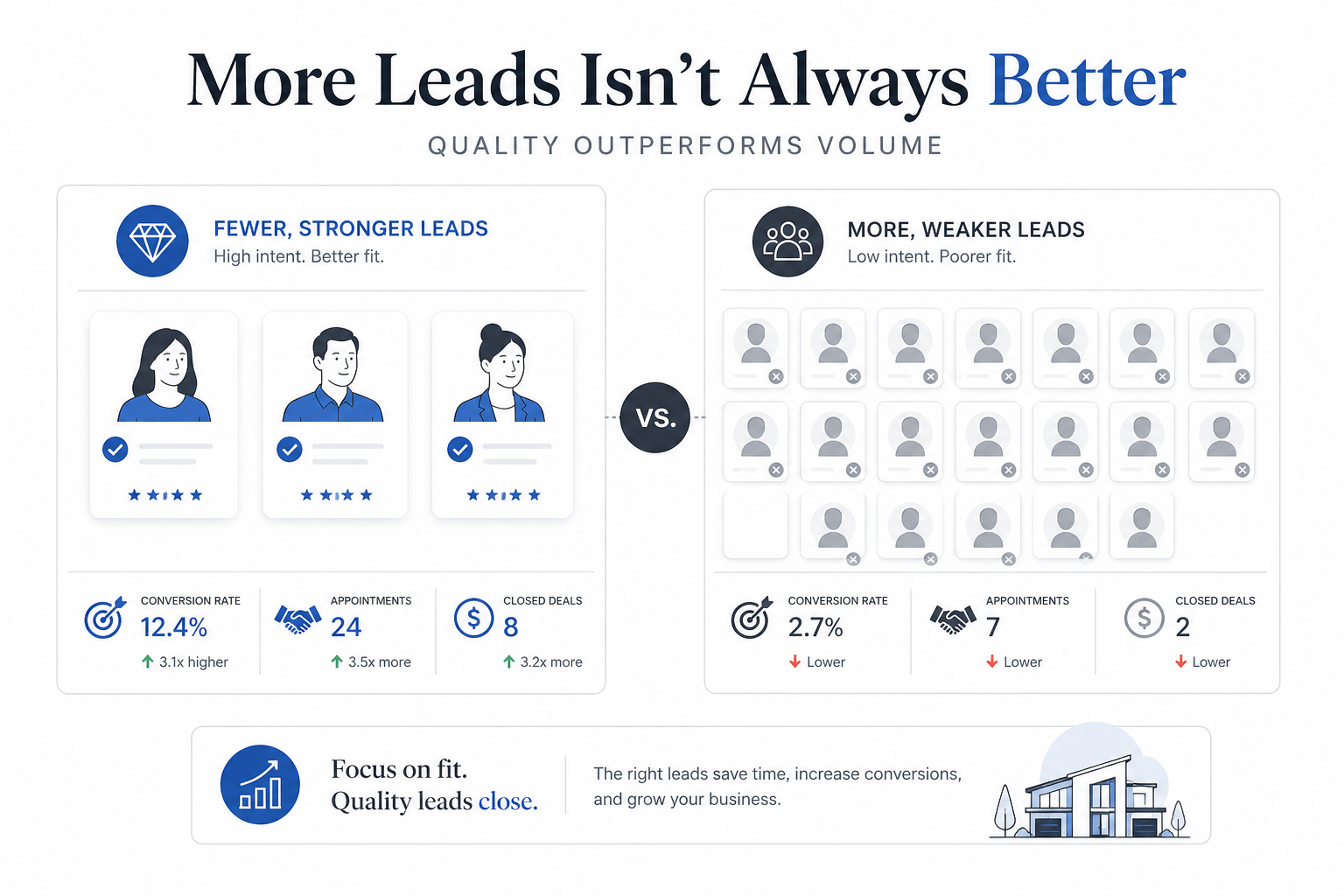
For developers, more leads are not automatically better. A smaller pool of better-fit prospects can be far more valuable if those buyers respond, match the product, book appointments, and move toward reservation or lease-up at a higher rate.
Why lead volume can be misleading
Top-of-funnel numbers are seductive because they are simple.
A campaign generated 500 leads instead of 250. The cost per lead fell. The reporting sheet looks strong.
But those numbers leave out the questions that actually matter:
- Were the buyers relevant to the project?
- Were they financially aligned with the offer?
- Did sales reach them in time?
- Did they book anything meaningful?
- Did they convert?
Without those answers, volume can hide deteriorating quality.
This is especially risky in categories such as pre-construction and off-plan sales, where a weak-fit enquiry is not just unhelpful. It consumes follow-up time, distorts reporting, and can mask more serious issues in targeting or message-market fit.
Fewer stronger leads usually create better economics
Developers do not make money from form fills.
They make money from qualified buyer movement.
That means a campaign with fewer total enquiries may still outperform if it creates:
- more qualified leads
- more booked appointments
- better unit or product fit
- faster progression through the funnel
- fewer obviously mismatched prospects
This is why marketing measurement beyond cost per lead and sales-marketing alignment matter so much. Reporting should show what happens after the lead arrives, not just how cheaply it was captured.
What developers should track instead of volume alone
A stronger reporting view usually includes:
These numbers create a more honest picture.
They also help reduce tension between marketing and sales, because both teams can finally discuss the same outcomes instead of different snapshots of performance.
Volume problems usually come from weak alignment
When a developer chases more leads at all costs, the root issue is often not the media itself.
It may be:
- targeting that is too broad
- messaging that attracts curiosity instead of fit
- weak qualification rules
- landing pages that over-promise
- no shared definition of a useful lead
This is exactly why CRM integration for real estate websites and better lead qualification logic improve results. Lead quality is shaped by the whole system, not just ad performance.
More leads can create less focus
There is another cost that often gets overlooked.
Bad-fit volume creates operational noise.
Sales teams spend time:
- contacting weak leads
- repeating basic qualification questions
- chasing people with low intent
- losing time that should go to serious buyers
Over time, this can reduce response quality even for stronger enquiries because the system becomes overloaded with noise.
A smaller, cleaner funnel can be easier to manage and more profitable.
When higher volume does make sense
This does not mean developers should always want fewer leads.
Higher volume is useful when:
- the audience fit remains strong
- the team can respond properly
- the CRM preserves context well
- qualification standards are clear
- the downstream conversion metrics hold up
In other words, volume is welcome when quality scales with it.
The mistake is celebrating the first without checking the second.
Final takeaway
The objective is not to fill the CRM.
It is to create qualified buyer conversations that can move the project forward.
Developers who understand that difference make better media decisions, protect sales capacity more intelligently, and build a healthier pipeline. More leads can be useful, but only when they bring more of the right people, not just more data.


